
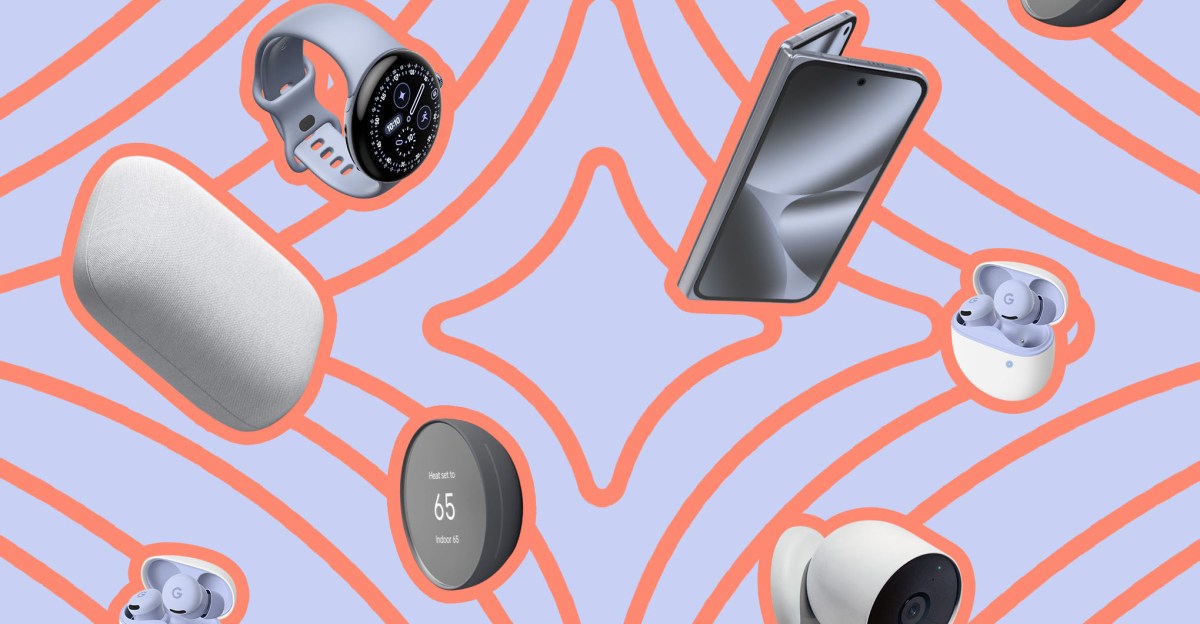
In tech, people often fantasize about a single, do‑everything device that would replace the smartphone and consolidate all functions. But according to The Verge senior reporter Victoria Song, that vision may never materialize. Instead, the future of AI hardware will be a diversified ecosystem made up of multiple accessories that together deliver a seamless intelligent experience. Google’s Pixel lineup shown at a recent Made by Google event is a vivid example of this trend. This view not only challenges traditional hardware design thinking but also suggests AI will further strengthen inter‑device links and drive tech giants to build more closed ecosystems.
Song recounts her firsthand experience at the Google event. On August 20, 2025, in a studio at the Brooklyn Navy Yard, Google unveiled four smartphones (Pixel 10, Pixel 10 Pro, Pixel 10 Pro XL and Pixel 10 Pro Fold), a smartwatch (Pixel Watch 4) and a pair of wireless earbuds (Pixel Buds 2a). Although the product lineup looked familiar, the event revealed a notable shift: AI is no longer just a software feature but is bleeding into every hardware corner. Gemini AI is embedded across all products to create a coherent ecosystem. This is not accidental but a deliberate part of Google’s AI‑hardware strategy. Song argues that AI will not break down device boundaries but rather reinforce them, meaning the number of devices we carry may not shrink and could increase.
Wearables play a vanguard role in this ecosystem. Sandeep Waraich, head of Google Pixel wearables, explained that early wearables focused on data collection—think Fitbit’s quantified‑self approach. With AI, the emphasis has shifted to continuous insights and personalized recommendations. Wearables generate vast quantities of data, and AI excels at extracting actionable insights to keep users engaged over the long term. Consequently, fitness trackers and related apps are increasingly adopting AI capabilities to handle complex analytics. Unlike smartphones, wearables are the only computing devices that reliably stay on the body. Even if a phone is left on a table or powered off, a watch or earbuds can continue monitoring the user. For an AI assistant to be truly personalized it must know a great deal about the user—wearables are an ideal vehicle for that understanding.
That said, AI hardware is still in a ‘‘spaghetti’’ phase: many ideas are circulating and it’s unclear which form will win. The market has spawned various experiments, from always‑listening life recorders to Meta’s multimodal smart glasses and mysterious projects involving Jony Ive and Sam Altman. Google vice president Rishi Chandra acknowledged that it’s too early to bet on any single form factor. AI is advancing rapidly and any hardware bet can become outdated quickly. Therefore, Google is embracing diversity: experimenting with new forms such as the Android XR smart‑glass platform while also maximizing the potential of existing devices. Phones are the starting point; watches and earbuds are natural extensions, but the true potential of AI hardware has yet to be unlocked. Through iteration and optimization, Google hopes to create combinations that have not been seen before.
Chandra emphasized that the future will be a ‘‘diverse set of accessories’’ users can assemble according to their environments and needs. These accessories must cooperate seamlessly, or the ecosystem will collapse. This idea aligns closely with Google’s ambient computing vision: devices fade into the background and autonomously respond to users’ needs. For example, when you walk into a room an AI‑connected light bulb could adjust lighting based on a phone message because it knows you suffer from migraines. Ambient computing requires collaboration among multiple devices rather than a single superdevice. If Gemini becomes a de facto AI and is primarily embedded in Google hardware, it could help users overlook the ‘‘green bubble’’ messaging divide (iOS versus Android) and further consolidate Google’s ecosystem.
Part of this shift stems from smartphone market saturation. Smartphones are nearly 20 years old; what once astonished now feels as mundane as a Toyota Camry. Verizon CEO Hans Vestberg said last year that ‘‘the exciting era is over,’’ and many people are keeping phones for three years or more. Acknowledging slower upgrade cycles, tech giants are turning to AI hardware to re‑energize the market. The rise of smart rings and the interest in Meta’s smart glasses reflect this trend. Although the metaverse failed to meet expectations, AI wearables are becoming a new focus.
Yet this vision can be disconnected from user needs. Google executives claim Gemini aims to simplify life and give people back time, but how does adding more AI devices alleviate modern fatigue? Song questions whether, even if some value is evident, it’s obvious how more devices will solve existential exhaustion. The expansion of AI hardware could deepen fragmentation and force users to manage more chargers and adapters.
From an analytical perspective, Google’s approach is a sensible wager. It leverages existing strengths to position products like the Pixel 10 and Pixel Watch 4 at the AI forefront. It also reflects industry competition: Apple, Meta and OpenAI are pursuing similar paths. The challenges are ecosystem compatibility and privacy; massive data collection raises concerns, and AI must ensure security and transparency.
Overall, the future of AI hardware is not a single unified device but a cooperative ecosystem. This will reshape user experiences and drive innovation, but it also requires vigilance against fragmentation and fatigue. Tech giants such as Google are using AI glue like Gemini to build more powerful empires. Looking ahead, this ecosystem could achieve truly invisible computing—but only if it balances diversity with simplicity.