
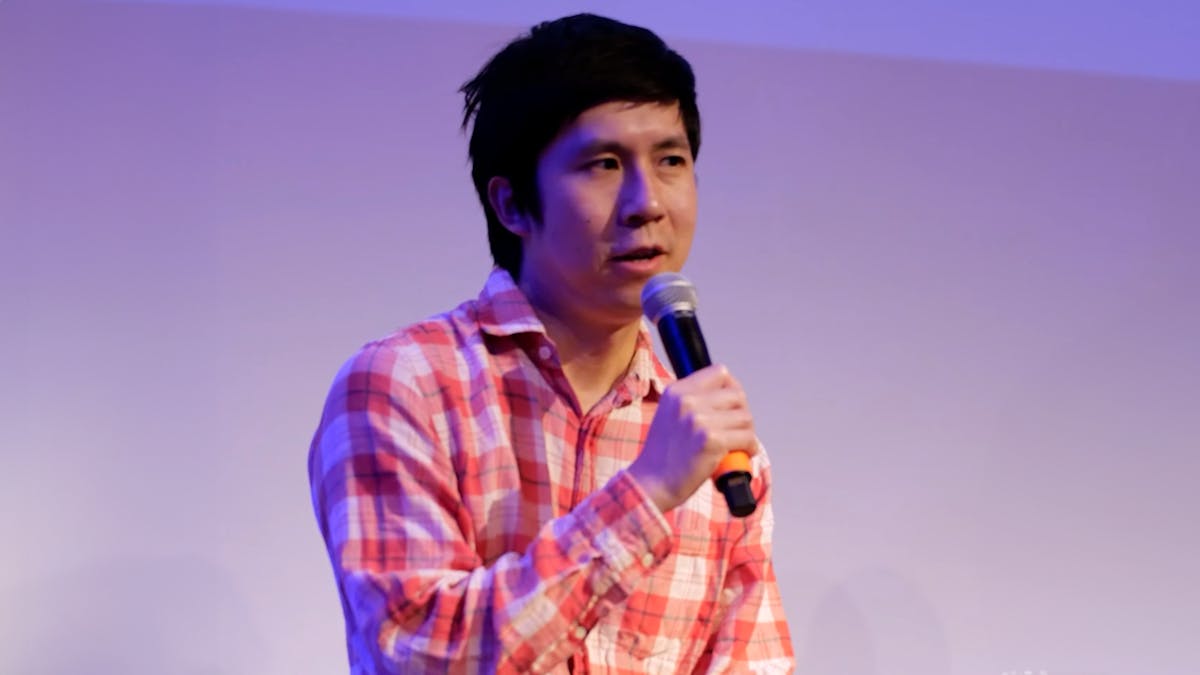
On January 12, 2026, tech outlet The Information reported exclusively that former Google DeepMind senior researcher Andrew Dai formally launched a new company, Elorian, and is raising about $50 million in a seed round. The startup brings together several top visual and multimodal AI researchers from Google and Apple, aiming to build a next‑generation unified vision AI model capable of understanding text, images, video and audio, with an initial priority on video understanding and computational efficiency. According to The Information, the financing has already received preliminary commitments from several top venture capital firms, valuing the company at around $200 million. Reuters and TechCrunch quickly followed up, saying Elorian's founding marks a new high in AI talent mobility and signals a new round of intense competition in multimodal AI.
Founder Andrew Dai: 14 years of tenure at Google DeepMind
Andrew Dai was an early core member of Google DeepMind and joined Google Brain (DeepMind's predecessor) in 2012, working at Google for 14 years (2012–2026). During his time at Google he participated deeply in early developments related to the Transformer architecture, the T5 model and Switch Transformer, and is regarded as a veteran expert in multimodal AI. His LinkedIn profile indicates a focus on efficient large‑scale model training, vision–language pretraining and multimodal fusion, and he has published multiple influential papers on arXiv, including Transformer‑related work with Vaswani and others. His departure has been cited as a typical case of AI talent leaving Google. The Information reported that Dai left Google DeepMind in early 2026 and immediately founded Elorian, demonstrating his strong conviction in vision AI.
Dai's motivation stems from reflecting on current models: today’s multimodal systems (such as Gemini, GPT‑4o and Claude 3.5) are relatively mature at fusing images and text, but video understanding still faces major bottlenecks — high computational complexity, long contexts and loss of dynamic information — while inference costs remain high. VentureBeat noted that Dai intends to address the consensus view that "video is the next frontier battlefield for AI."
Team lineup: a "dream team" of Google and Apple vision experts
Elorian's team is described as top‑tier: in addition to Dai himself, it includes several senior visual and multimodal researchers from Google and Apple. The Information disclosed:
- Former Google Brain/DeepMind members: at least three to five people who played core roles in projects such as Transformer, ViT (Vision Transformer) and VideoMAE.
- Former Apple researchers: at least two engineers who worked on Apple Vision Pro and AR/VR multimodal perception.
This lineup is seen as Elorian's greatest advantage. TechCrunch reported that Google and Apple’s accumulated strengths in vision AI (Google’s ViT series, Apple’s neural rendering and point cloud processing) will be integrated by Dai to build a unified multimodal model. Bloomberg analyzed that this team composition helped Elorian secure a high seed valuation (around $200 million), well above peers.
Technical direction: next‑generation multimodal vision AI focused on video and efficiency
Elorian's core goal is to build a "next‑generation vision AI model" that can both understand and generate text, images, video and audio within a unified system. The Information reports the model will prioritize two main challenges:
- Video understanding: current models face exponentially increasing computation for long videos (O(n²) or worse) and severe context loss. Elorian plans to explore new architectures (such as efficient Transformer variants or state‑space models) to capture long‑range dependencies in video and enable real‑time inference.
- Computational efficiency: high inference cost is an industry pain point. Elorian will focus on model compression, quantization, knowledge distillation and mixture‑of‑experts (MoE) techniques, targeting a reduction in video understanding cost to as low as one‑tenth of current levels.
Potential technical approaches may include:
- Unified multimodal pretraining: analogous to CLIP and Flamingo’s vision–language pretraining but extended to video and audio.
- Long‑sequence processing: drawing on linear attention mechanisms like RWKV or Mamba to address long video contexts.
- 3D and dynamic modeling: leveraging expertise in point clouds and geometric learning (as exemplified by work from researchers such as Guibas), potentially for AR/VR applications.
VentureBeat noted that this direction competes with OpenAI’s Sora and Google’s Veo, but Elorian emphasizes efficiency and potential open‑source contributions.
Funding details: strategic significance of the $50M seed round
The Information reports Elorian has received preliminary commitments from several top VCs for a seed round of about $50 million, valuing the company at roughly $200 million. Potential investors may include Sequoia Capital, Andreessen Horowitz and Lightspeed, among others active in AI. Planned uses of funds include:
- Team expansion (aiming to grow from roughly 10 people to 30–50).
- Purchasing compute resources (GPU clusters or TPU rentals).
- Model training and prototype development.
This scale places the round in the upper tier of 2026 AI seed financings and reflects investor optimism about vision AI. TechCrunch observed that compared with much larger rounds such as xAI’s, Elorian’s raise is more pragmatic, but its team background and focus give it strong potential.
Industry impact: accelerating AI talent mobility and intensifying multimodal competition
Elorian’s founding exemplifies the 2025–2026 wave of AI talent mobility. Departures by researchers from Google DeepMind and Apple to start companies have become common; The Information counted at least ten similar teams in 2025. Bloomberg noted that this trend has prompted giants to strengthen retention efforts but also accelerates innovation diffusion.
The move has broad implications for the multimodal AI market: Statista forecasts the multimodal AI market will reach $60 billion in 2026, and breakthroughs in video efficiency could reshape competition. Challenges include regulation — the EU AI Act imposes strict requirements on high‑risk vision AI — and privacy and ethics: vision AI can generate deepfakes, necessitating built‑in watermarking and content review.
Conclusion: potential and challenges for a rising vision AI startup
Led by Andrew Dai, Elorian has launched with a $50 million seed round, gathering top talent from Google and Apple to pursue next‑generation multimodal vision AI. While the company has not disclosed specific products, its focus on video understanding and computational efficiency is forward‑looking. Success will determine whether it can stand out amid competition from OpenAI, Google and Meta. In 2026, competition in vision AI will intensify, and Elorian’s progress will be worth watching — a reminder that AI’s future depends not only on large incumbents but also on these emerging "dream teams."
▶️ Enjoy this article? Content creation is hard work!
Follow our YouTube channel:
AI Rosetta
Your likes, subscriptions and shares are our greatest support! 🙏
More AI news at: https://www.airosetta.com