
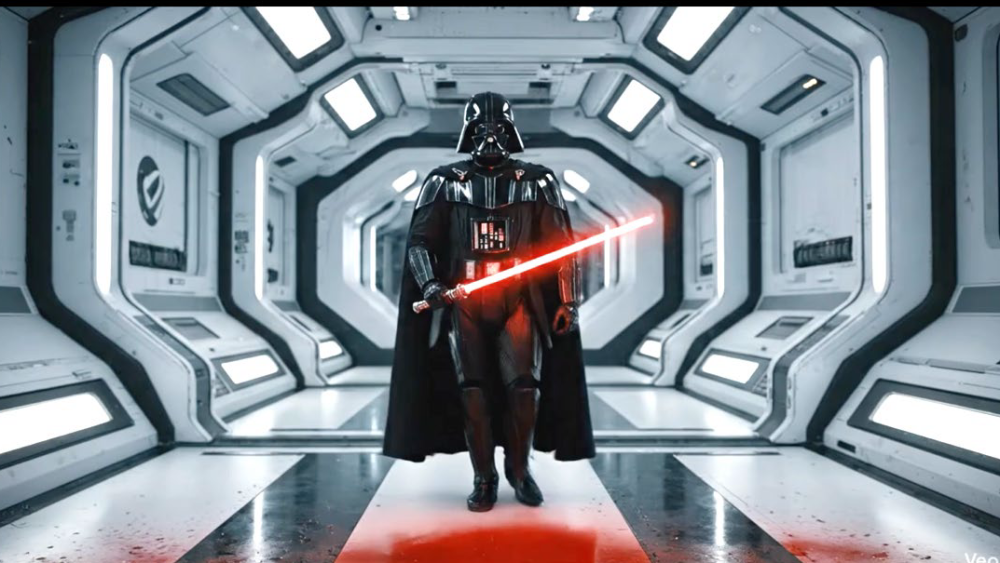
As copyright battles over artificial intelligence intensify, The Walt Disney Company on the evening of December 10 U.S. time sent a cease‑and‑desist letter to Google, accusing the company of large‑scale infringement of its intellectual property during AI model training, including films, characters and derivative works. The move came just hours after Disney signed a $1 billion licensing agreement with OpenAI and is being seen as a clear sign that Disney is "picking a side." Variety reported that Disney’s lawyers emphasized in the letter that Google "refused to implement any technical measures to mitigate or prevent copyright infringement," and demanded an immediate stop to the allegedly infringing activities or face legal action. The incident swiftly reverberated across the industry, highlighting an escalation in copyright disputes between content giants and tech platforms in the AI era.
Background: Disney’s dual approach to AI
Disney’s action stems from a "two‑pronged" strategy in the AI space. On December 10, Disney announced a $1 billion licensing agreement with OpenAI permitting the use of Disney intellectual property to train AI models, while OpenAI’s Sora video‑generation tool will be licensed to Disney for content creation. WIRED noted that the deal marks a shift from "defense" to "collaboration," aiming to leverage AI to enhance animation, film and theme‑park experiences while avoiding the passive position seen during past industry disputes. Disney CEO Bob Iger said the move will "reshape the entertainment industry," and stressed that the agreement includes strict copyright protections.
However, the "honeymoon" turned into a challenge almost immediately. Disney accuses Google’s AI services (such as the Gemini series) of using its vast content library to train models without authorization, resulting in what it calls "mass infringement." Axios reported that the letter lists protected Disney works in detail, including Star Wars, Marvel characters and classic animated properties, alleging those materials were used in generative AI training datasets. Disney’s legal team says Google’s AI systems "replicated large portions of Disney’s films, characters and other protected material" and refused to adopt technical measures such as content filtering or watermarking. The Hollywood Reporter added that Disney is demanding transparency about Google’s training data and the immediate removal of any infringing material.
The allegation is not isolated. In 2025, AI copyright disputes proliferated: earlier, The New York Times sued OpenAI and Microsoft over use of its articles to train GPT models; Hollywood unions also filed collective lawsuits over deepfake technologies. Disney’s move is being read as an industry bellwether. TubeFilter noted that after partnering with OpenAI, Disney "immediately turned toward Google," seeking to rebalance competitive dynamics while safeguarding its content empire. A Google spokesperson said the company will "take the letter seriously" but declined further comment.
Alleged infringement details: the gray area of AI training
Disney’s letter targets Google’s AI training methods. Cartoon Brew reported that Google’s Gemini model allegedly extracted Disney content from YouTube (a Google subsidiary), including high‑definition clips and derivative user‑generated content, for use in AI generation. Disney claims this violates the U.S. Digital Millennium Copyright Act (DMCA) and constitutes "widespread" infringement. Specifically, Google’s AI may have used iconic Disney characters (such as Mickey Mouse or Iron Man) to generate new content, creating potential commercial harm.
The accusation echoes a broader industry concern: AI training depends on massive datasets, while copyright boundaries remain ambiguous. On Reddit’s r/technology, users suggested Google’s refusal to adopt mitigation measures may be commercially motivated, intensifying worries among content creators. Disney’s agreement with OpenAI differs by including "content filtering" and "usage restriction" clauses to ensure AI outputs do not infringe Disney IP. WIRED commented that the episode "redefines the AI copyright wars," and that Disney’s combined licensing‑and‑litigation strategy could become a template.
Market impact: an escalation in the AI copyright fight
Disney’s move has broad implications for the AI sector. Axios analyzed that it could trigger a chain of lawsuits, pushing giants like Google to strengthen copyright compliance through licensing models or content watermarking. Google’s stock dipped about 0.5% after the announcement, while OpenAI’s valuation may have risen on the back of the deal. IDC predicts that by 2026 AI‑related copyright disputes could account for 30% of intellectual property cases, with economic losses exceeding $100 billion.
For Disney, the action reinforces its position in AI‑driven entertainment. Through OpenAI’s Sora, Disney can generate customized content to bolster its streaming competitiveness. The challenge lies in enforcement: if Google does not respond, Disney may bring the matter to court, continuing a pattern of aggressive stances in other anti‑piracy cases.
Outlook: balancing innovation and protection
Disney’s cease‑and‑desist letter may mark a turning point in the AI copyright fight. Variety observed that content giants are shifting from passive defense to proactive collaboration, and the OpenAI agreement could set an industry standard. Google must respond to protect its reputation, and the episode may accelerate calls for greater transparency and regulation in AI training. The Hollywood Reporter wrote: "This is not just a battle between Disney and Google; it is a contest between AI innovation and intellectual‑property rights." In this wave, AI companies will need to balance technological progress with ethical limits to ensure sustainability.
▶️ Enjoyed this article? Creating great content takes effort!
Subscribe to our YouTube channel:
AI Rosetta
Your likes, subscriptions and shares mean the world to us! 🙏
For more AI news, visit:
https://www.airosetta.com