
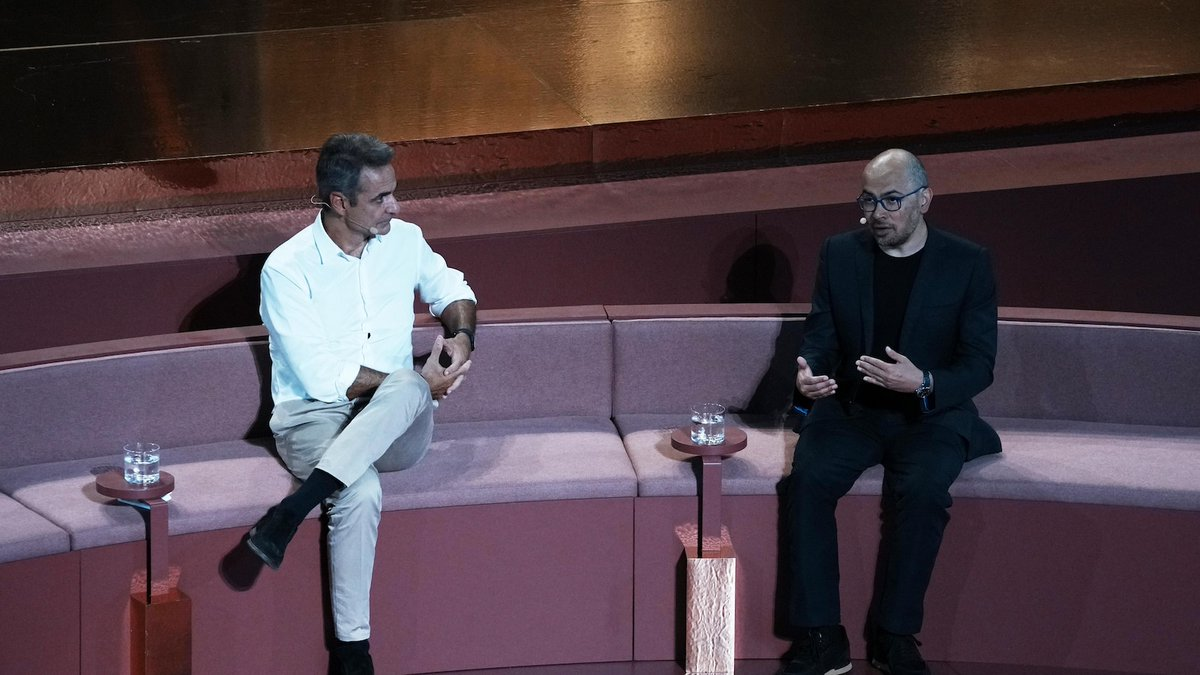
As artificial intelligence (AI) reshapes global education and the workplace, 2024 Nobel Prize in Chemistry laureate and Google DeepMind CEO Demis Hassabis told ABC News in an exclusive interview on September 14, 2025, that the core future competency is no longer traditional skills but "learning how to learn." The leading Google scientist warned that AI's rapid development is changing work and learning at an unprecedented pace, and humans must cultivate adaptive thinking to meet the challenges of automation and the skills gap. Hassabis' remarks quickly sparked global debate; related posts on X received 60,000 views, underscoring the urgency of education reform in the AI era. This idea not only guides individual development but also offers new directions for global education policy and is expected to influence future training frameworks for 50 million students.
From AI pioneer to ethics advocate: Hassabis's shift
Hassabis is known for pioneering deep learning and AI applications in chemistry; his AlphaFold project directly cracked the protein folding problem and earned the 2024 Nobel Prize in Chemistry. He founded Google DeepMind in 2014 and became CEO in 2023, driving breakthrough models such as Gemini. In the interview he emphasized that AI has improved educational efficiency by 30%, for example by optimizing learning paths through personalized instruction, but it has also intensified skill inequality: those who know "how to learn" will lead, while those clinging to outdated skills will be left behind.
Hassabis explained that "learning how to learn" means developing metacognitive abilities: understanding one’s own learning process, adapting quickly to new tasks, and critically evaluating AI‑generated information. For example, when using AI tools like Gemini 2.5, students need to learn to break down complex problems and iterate on AI outputs rather than passively accept answers. He gave an example: beginners in programming should focus on problem decomposition and debugging rather than memorizing code, since AI can automatically generate about 90% of basic code. This skill is equally crucial in the workplace: a McKinsey report predicts that by 2030, 30% of current jobs will be displaced by AI automation, but those with strong learning abilities will transition into emerging roles such as AI ethics reviewers.
AI’s impact on education and work: the data behind the change
Hassabis' views are grounded in data: AI has raised efficiency in education systems globally by 30%, for example reducing review time by 50% through intelligent tutoring systems. But challenges remain: the World Economic Forum estimates AI will prompt the reconfiguration of 100 million jobs, especially in clerical, customer service, and basic analysis roles. In the interview he also mentioned the "hallucination" problem of AI chatbots (such as ChatGPT)—with error rates as high as 10%–15%—requiring users to have verification skills. Learning how to learn therefore includes mastering "information filtering": extracting valuable elements from AI outputs while questioning potential biases.
Hassabis stressed the skills gap in low‑income countries. AI tool adoption reaches 70% in developed countries but only 20% in Africa, creating unequal educational resources. He called for global education reform to integrate metacognitive training, for instance using project‑based learning to cultivate problem‑solving skills. The European Union has responded, planning to roll out an AI education framework in 2026 covering 50 million students.
Ethics and regulation: the other side of learning how to learn
Hassabis' warnings go beyond skills. He reiterated DeepMind’s commitment to AI safety: AI can be abused by "bad actors" to generate disinformation or manipulate public opinion, so people must actively learn to "discern the truth." The U.S. FTC’s recent probe into AI companion robots highlights risks of emotional manipulation; Hassabis commented: "Learning how to learn includes learning to say 'no.'" He supports global AI governance efforts, such as a U.N. AI ethics declaration, and emphasizes transparency in training data.
Looking ahead: adaptation from individual to society
Hassabis predicts that by 2030 AI will contribute $15 trillion to global GDP, but only "learners" will share in the gains. He advises individuals to act on three fronts: first, study metacognition through online courses (such as Coursera); second, join interdisciplinary projects to train rapid adaptation; third, become familiar with AI tools (such as Copilot) and treat them as "cognitive assistants." For policymakers, he calls for investment in "equitable AI education" to narrow the digital divide.
In sum, Hassabis' concept of "learning how to learn" is not only a skills roadmap but an existential philosophy for the AI era. In the X community discussion, ABC’s post received 60 likes and users urged that "education systems must keep pace with AI." Facing AI‑driven change, learning how to learn may become humanity’s "passport" to ride the wave.