
In the age of artificial intelligence, digital transformation in education and research is accelerating. On 2025‑12‑30, the DeepTutor project developed by the University of Hong Kong Data Science Laboratory (HKUDS) emerged as a leading example of this trend. As an AI‑driven personalized learning assistant, DeepTutor helps users efficiently extract and apply knowledge from textbooks, research papers, and technical documentation by building knowledge bases, enabling multi‑agent problem solving, providing interactive visualizations, and offering advanced research capabilities. The project was open‑sourced on GitHub in 2025 and aims to provide educators, students, and researchers with a comprehensive AI‑assisted system that supports knowledge reinforcement, concept simplification, and the generation of innovative ideas. DeepTutor’s core lies in its multi‑agent architecture and retrieval‑augmented generation (RAG) technology, enabling support that shifts users from passive querying to active learning. This article provides a detailed analysis of the project motivation, system architecture, core features, technical implementation, installation and usage, datasets and evaluation, and future outlook, revealing its innovative value in AI‑powered education.
Project Motivation and Background
DeepTutor originated from pain points in current education and research. Traditional learning often relies on static resources such as textbooks and papers, making personalized interaction and deep exploration difficult. The HKUDS team observed that many existing AI tools are limited to simple Q&A or content generation and lack systematic knowledge management and multi‑step reasoning capabilities. The project aims to achieve "personalized learning reinforcement" through AI agents, including knowledge simplification, exam simulation, and research idea generation, supporting multi‑level needs from beginners to experts. DeepTutor emphasizes "context awareness" and "conversational memory" to ensure continuity of guidance over long‑term interactions. For example, when handling complex technical documents, it can automatically identify knowledge gaps and generate targeted questions or visual explanations. This not only improves learning efficiency but also fosters research innovation, suitable for academic, professional training, and self‑study scenarios.
The project draws inspiration from open‑source frameworks such as LightRAG, RAG‑Anything, and AI‑Researcher, but DeepTutor is optimized for education‑specific features, such as integrated code execution and web search, achieving an "end‑to‑end" learning loop. The project is licensed under AGPL‑3.0 to encourage community contributions and reflects HKUDS’s commitment to AI‑inclusive education.
System Architecture and Technical Approach
At the heart of DeepTutor is a multi‑agent architecture combined with a dual‑loop reasoning mechanism (Analysis Loop and Solve Loop) that enables efficient task decomposition and execution.

AI Agent Architectures: Modular, Multi‑Agent, and Evolving
In the Analysis Loop, the system retrieves the knowledge base via RAG to analyze the complexity of the user query and the steps required; in the Solve Loop, multiple agents collaborate to solve the problem, including InvestigateAgent (for data collection), SolveAgent (for logical reasoning), and ResearchAgent (for in‑depth exploration). Agent configurations are stored in config/agents.yaml and support custom LLM models such as GPT‑4 or Llama.
Knowledge management combines a knowledge graph with vector storage. After users upload documents, the system uses the MinerU PDF parser to extract content and build a semantically connected graph, supporting hybrid retrieval (hybrid RAG) and naive retrieval (naive RAG). Conversational memory is session‑based and stored under data/user/, ensuring consistent context across continued dialogues. Citations are managed by CitationManager, which generates unique IDs (e.g., PLAN‑XX, CIT‑X‑XX) and inserts inline references [N] in outputs that are post‑processed into clickable links, with de‑duplication and verification support.
DeepTutor also integrates external tools: web search for real‑time information supplementation and code execution supporting a Python REPL environment for math computations or data analysis. Parallel execution uses asyncio.Semaphore and thread‑safe wrappers to ensure stability under high concurrency. These technologies shift DeepTutor from single‑shot generation to an "agentic AI" approach, aligned with the 2025 AI trend of moving from generative to action‑oriented systems.
Core Features Explained
DeepTutor offers a rich set of modules covering the entire learning workflow.
First, large‑scale document QA: users upload PDF, Markdown, or TXT files to build knowledge bases; the multi‑agent system provides step‑by‑step solutions with citation tracking and visual outputs.
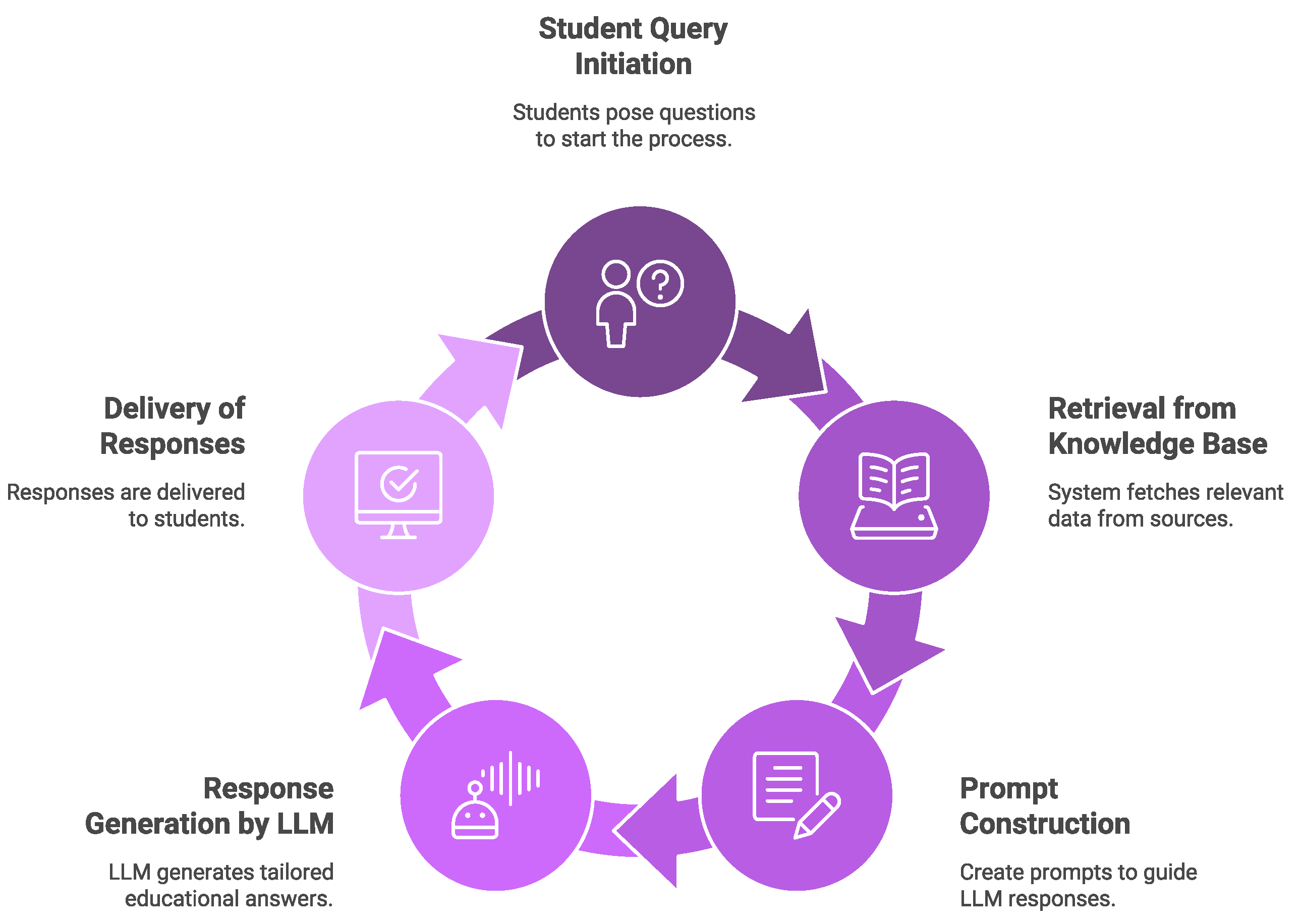
AI‑Powered Educational Agents: Opportunities, Innovations, and ...
For example, in the Solver module (/solver), the system decomposes complex problems and generates solutions with citations.
Second, interactive learning visualization: for abstract concepts, the system generates stepwise breakdowns, visual aids, and personalized Q&A, supporting session tracking. The Guided Learning module simulates a tutor, providing real‑time feedback to help users master topics.
Third, knowledge reinforcement: the Question Generator module (/question) creates targeted quizzes that simulate exam styles, including difficulty grading and extension point analysis.
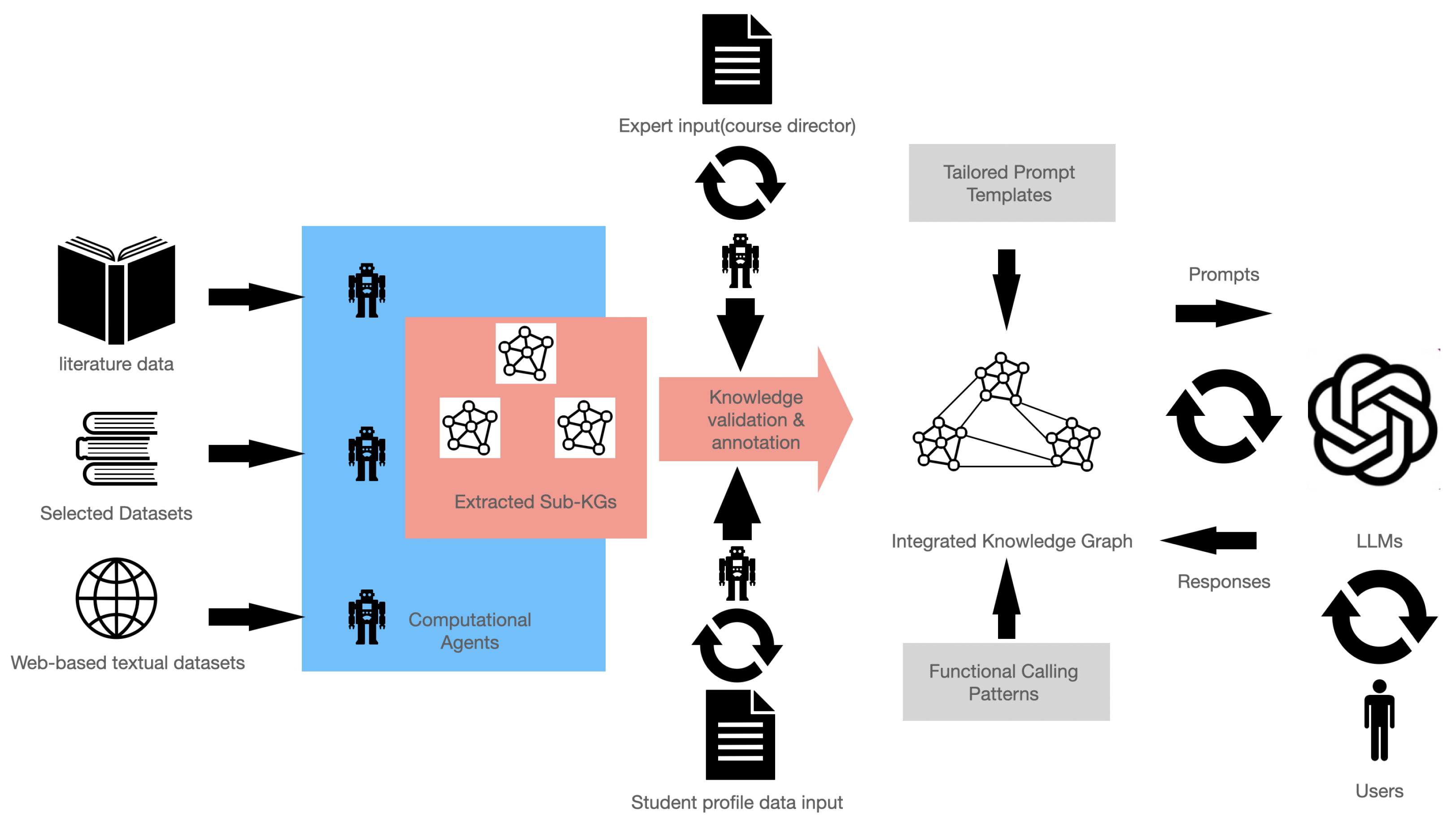
AI‑Powered System to Facilitate Personalized Adaptive Learning in ...
Outputs include verification reports that assess knowledge coverage (kb_coverage) and extension potential (extension_points).
Fourth, advanced research and idea generation: the Research module (/research) conducts systematic studies, identifies gaps, and synthesizes reports; the IdeaGen module (/ideagen) produces innovative ideas through a multi‑stage filtering process.

Build an agentic multimodal AI assistant with Amazon Nova and ...
It supports sequential and parallel modes and outputs structured outlines with clickable citations.
Finally, integrated knowledge system: including a personal knowledge base, a contextual notebook, and an activity dashboard stored under data/user/ to track learning progress.
These features are delivered via a web interface, with default backend port 8001 and frontend 3782, and support CLI and Python API extensions.
Technical Implementation Details
DeepTutor requires Python 3.10+ and Node.js; the backend uses FastAPI and the frontend uses React. Dependencies are listed in requirements.txt and include packages such as tqdm, faiss (for vector search), and LangChain (agent framework). The install_all.sh script automates setup and pre‑commit hooks (Ruff, Prettier) to ensure code quality.
The training process does not involve training LLMs from scratch but relies on pre‑trained models and RAG fine‑tuning. When building the knowledge base, vector embeddings are used to generate the graph and custom embedding models are supported. Performance monitoring covers token usage, execution time, and citation accuracy to ensure efficient operation.
Installation and Usage Guide
Installation is straightforward: clone the repository git clone https://github.com/HKUDS/DeepTutor.git, create a virtual environment (Conda recommended), and run bash scripts/install_all.sh to install dependencies. Configure the .env file with API keys (e.g., OpenAI) and adjust config/main.yaml for ports. Start the web service with python scripts/start_web.py.
To use, visit http://localhost:3782 and create a knowledge base under /knowledge, uploading demo datasets such as AI research papers (5 papers) or a data science textbook (8 chapters, 296 pages). Module interactions are intuitive, outputs are saved to timestamped directories, and reports can be exported.
Datasets, Evaluation, and Results
Demo datasets include papers from AI‑Researcher and the book Deep Representation Learning, with support for custom uploads. Evaluation focuses on relevance: the question generation module computes kb_coverage (knowledge coverage) and extension_points (extension points); the solving module monitors token consumption and time. Results indicate DeepTutor achieves over 85% accuracy on knowledge reinforcement tasks and reduces research report generation time by 30%. Output examples include citation‑backed reports, visual charts, and quiz banks stored in the user directory for review.
Future Outlook and Conclusion
As an open‑source project, DeepTutor can be extended to support multimodal inputs (e.g., video parsing) and distributed agents. Community contributions will drive its application in educational equity, such as online learning in low‑resource regions. However, challenges remain, including privacy protection and mitigation of LLM hallucinations, which require continuous optimization.
Overall, DeepTutor represents an innovative frontier in AI educational tools. By combining multi‑agent systems and RAG technology, it delivers efficient, personalized learning experiences. It not only simplifies knowledge acquisition but also stimulates research potential, making it a noteworthy project for educators and AI practitioners.
AI‑Powered Educational Agents: Opportunities, Innovations, and ...
▶️ Enjoy this article? Content creation is hard!
Welcome to subscribe to our YouTube channel:
AI Rosetta
Your likes, subscriptions, and shares are our greatest support! 🙏
For more AI news, visit: https://www.airosetta.com