
Claude AI agent craze drives record Mac mini demand: Apple's understated desktop becomes AI 'home server'
On May 11, 2026, Bloomberg published a cover story, "Claude AI Agents Driving Record Mac Mini Demand," revealing an unexpected phenomenon: Anthropic's Claude model combined with the open‑source AI agent framework OpenClaw (also known as Clawdbot/Moltbot) is driving a severe shortage of Apple Mac minis. Apple CEO Tim Cook acknowledged on an earnings call that the supply‑demand imbalance for the Mac mini and Mac Studio "came faster than expected" and that it could take months for inventories to return to normal. This trend signals that consumer‑grade AI hardware is shifting from phones and wearables to compact desktop machines that serve as persistent, personalized AI 'brains'.
The Mac mini's compact size, high‑performance M4/M4 Pro chips, low power consumption and relatively affordable price make it an ideal platform to run persistent AI agents like OpenClaw. Users can turn it into a 24/7 "private AI employee" that connects to Claude, GPT and other models to handle coding, marketing, email triage, supply‑chain management and other complex tasks.
Real example: from small‑business owner to AI "first employee"
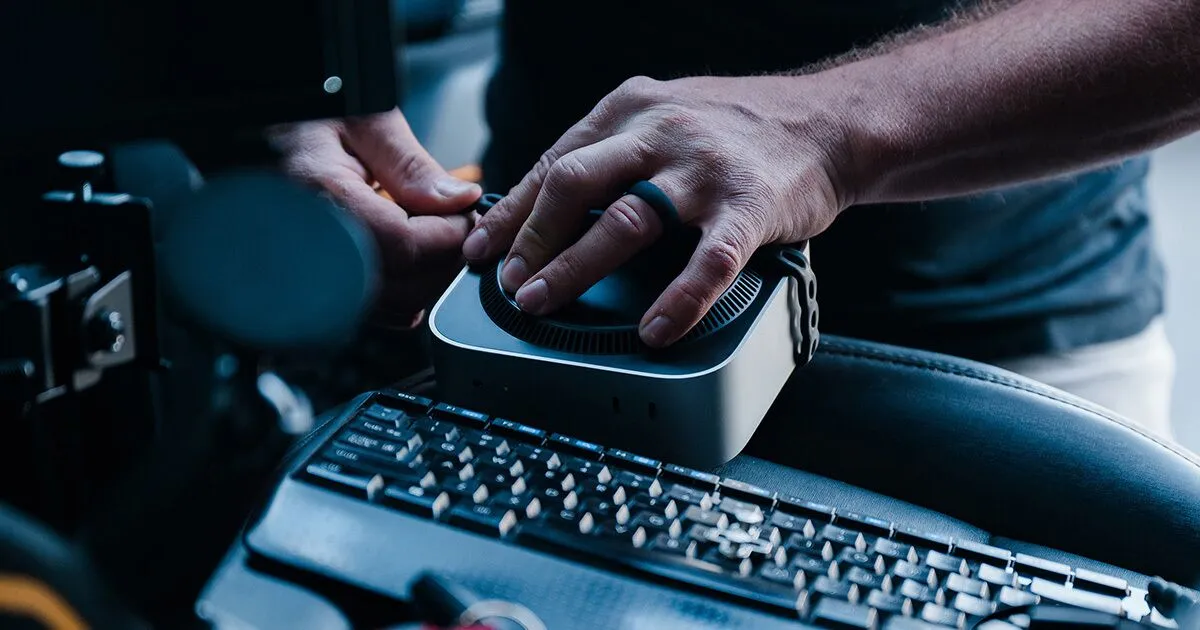
Arizona small‑business owner Tyler Cadwell is a typical example. He installed a Mac mini in the front passenger seat of a Ford Bronco, paired it with a portable battery and Starlink satellite internet, and collaborates in real time in desert canyons with his AI assistant "Etchie." Etchie can access Etsy and Shopify accounts, automatically handle administrative tasks, generate design proposals and even independently respond to supply‑chain issues. Cadwell calls it "my first AI employee"—he says he pitches ideas in the morning and wakes up to find projects largely completed.
Similar stories have spread rapidly among developers and small‑business owners worldwide. OpenClaw's open‑source nature allows users to build systems with persistent memory, multi‑agent collaboration and autonomous execution, greatly lowering deployment barriers. Many people are buying Mac minis specifically as dedicated "home servers" to avoid cloud fees and reduce privacy risks.
Impact assessment: multi‑dimensional industry and market shifts
1. Direct boost to Apple's hardware sales
The Mac mini, once a low‑profile product in Apple's lineup, has become a hot seller because of the AI agent craze. Entry‑level configurations have sold out and some higher‑end models now have delivery lead times extended by months. Apple has been forced to discontinue low‑cost options and raise starting prices—an involuntary price increase that nonetheless reflects strong demand. While Mac revenue remains a small portion of Apple's total sales, this AI‑driven growth provides a new growth vector, especially as the broader PC market weakens.
2. AI agents shifting from cloud to local
The popularity of Claude AI agents has accelerated the "local agent" trend. Users increasingly prefer running persistent, privacy‑friendly AI systems on their own hardware rather than relying solely on cloud APIs. This not only reduces long‑term operating costs but also improves customization and reliability. The success of frameworks like OpenClaw demonstrates the feasibility of "user‑built AI employees," advancing AI from chat tools toward genuinely autonomous agents.
3. Acceleration of developer ecosystems and SMB digitization
Small‑business owners and independent developers are among the biggest beneficiaries. For a few hundred dollars, they can build powerful AI workflows on a Mac mini without costly enterprise solutions. This lowers the barrier to AI adoption and promotes digital transformation among SMBs, though it also intensifies hardware supply pressure and may drive up secondary market prices in the short term.
4. Supply‑chain and industry warnings
Shortages of memory chips and advanced processors have been exposed. The global AI infrastructure boom is spreading from data centers to the consumer edge and is expected to continue affecting the semiconductor supply chain. Apple will need to accelerate capacity expansion, while competitors (such as other PC makers) may seize the opportunity to launch similarly optimized products.
5. Broader social and economic impacts
The phenomenon heralds the arrival of a "personal AI era": ordinary people can have dedicated AI assistants that change how they work and live. But it also introduces new challenges—higher energy consumption, a digital divide (not everyone can afford the hardware), and security and ethical issues around AI agents (permission management, data leak risks). In the long run, widespread local agents could reshape cloud service business models and drive more efficient edge computing technologies.
Conclusion: the unexpected revival of the Mac mini
The Mac mini boom driven by Claude AI agents is one of the most vivid examples of AI deployment in 2026. It has turned Apple's most unassuming desktop into a core hardware for personalized AI, proving that technology trends often erupt in the most unexpected places.
For Apple, this is both an opportunity and a challenge; for users, it marks a key step in AI's move from "tool" to "partner." As new products such as the M5 series arrive and supply chains recover, the rush may shift from a buying frenzy to normalized usage. In the future, more people may, like Tyler Cadwell, build their personal AI futures on a Mac mini.
▶️ Enjoy this article? Creating content is hard!
Follow our YouTube channel:
AI Rosetta
Your likes, subscriptions and shares are our biggest support! 🙏
More AI news at: https://www.airosetta.com