
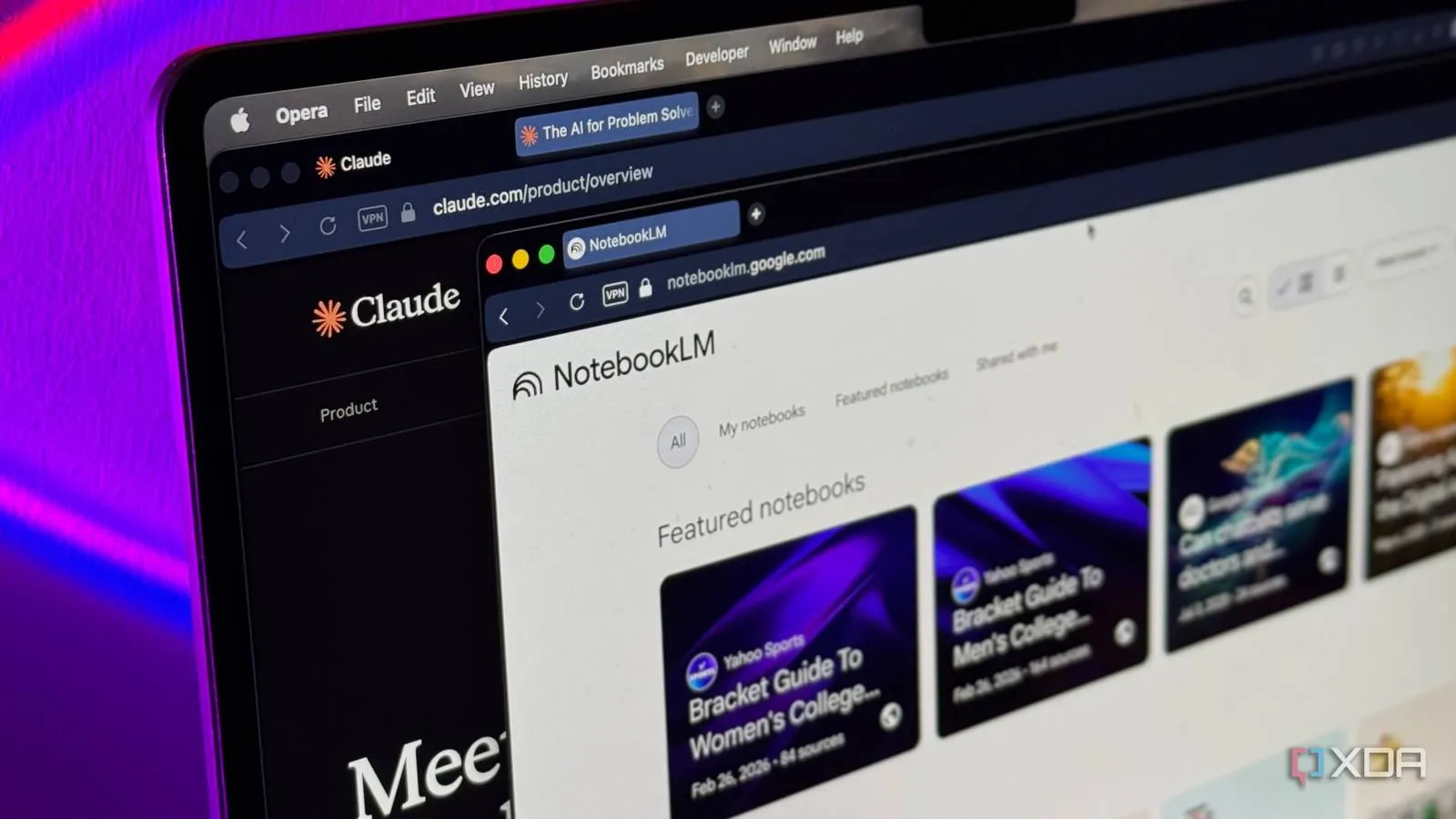
On April 6, 2026, an experience report published by XDA focused attention on two tools previously underestimated: Anthropic's conversational model Claude Code and Google's NotebookLM. Rather than stopping at product feature descriptions, the author put both into a real research workflow: first importing several PDFs, meeting notes and web materials into NotebookLM, then handing the extracted points and questions to Claude for deeper probing and cross‑checking.
In describing NotebookLM's operational details, the author noted the instant feedback during uploads: the system automatically recognizes section headings, figures and references and presents this structured information in a left sidebar, allowing the author to generate a "reading list" and "key experiment summaries" in a short time. The article gives an example: for a 20‑page conference paper, it took only minutes to obtain chapter‑by‑chapter key points and summaries of critical values, saving substantial browsing time.
The author then fed those NotebookLM‑extracted points to Claude one by one. In conversation, Claude first performed lateral comparisons: lining up how different papers measured the same metric and pointing out how small experimental‑setup differences could cause result variation; for citations, it rapidly resolved citation numbers back to specific sources, helping the author trace original data. In the example, after three rounds of dialogue Claude broke a vague conclusion into reproducible experimental steps and suggested additional control experiments to verify robustness.
The author admits, "Can't believe the tools I rolled my eyes at are now the ones I can't work without." In the workflow, NotebookLM's strength is bulk organization and structured notes, while Claude excels at synthesizing disparate information into leads, actionable research questions and checklists. One practical tip listed is to do a coarse filter in NotebookLM first, then use Claude for deep questioning; alternating the two can gradually eliminate "noise."
Although the report is positive about both tools' effects, it does not shy away from risks and limitations. The author points out that Claude can sometimes produce overconfident conclusions or "optimistic inferences," creating additional fact‑checking needs; NotebookLM can have gaps in structural recognition when handling complex tables or scans with poor OCR quality. The article also cautions readers to always return to original sources when citing generated references, especially for numerical values and experimental parameters.
In the practical‑advice section, the author shared several concrete operational tips: manually check the table of contents for each uploaded document, tag important passages in NotebookLM for later citation in Claude, and split Claude's answers into "fact," "inference" and "recommendation" segments while labeling each with a confidence level. The author says these details turn seemingly "flashy" AI features into repeatable research steps.
The article closes by emphasizing a mindset shift: from initial skepticism to incorporating these tools into the daily toolbox, with the key being to treat AI as an augmenting tool rather than a replacement. The author concludes that AI helps compress literature‑review timelines and increases the chance of finding potential issues, but turning conclusions into publishable papers still depends on researchers' rigorous handling of methods and data.
▶️ Like this article? Creating content is really hard!
Follow our YouTube channel:
AI Rosetta
Your likes, subscriptions and shares are our greatest support! 🙏
More AI news at: https://www.airosetta.com