
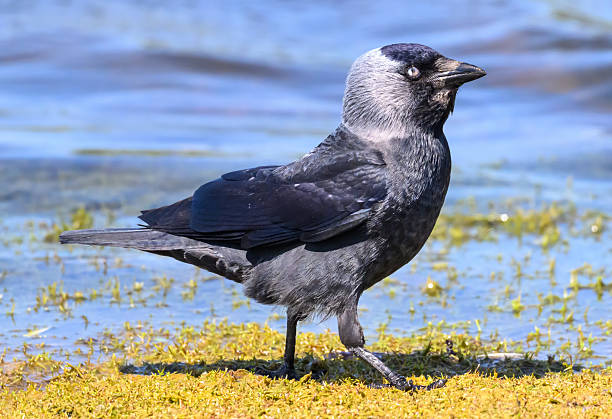
Bird lifespans vary widely, from small songbirds that live only a few years to albatrosses and parrots that can live more than a century. Below is a systematic ranking of lifespans (from shortest to longest), compiled from recent zoological studies and bird banding data.
🕊️ 1. General patterns in avian lifespan
Bird lifespan is typically strongly correlated with the following factors:
- Body size: larger species generally live longer (inversely related to metabolic rate).
- Flight frequency and energy expenditure: high‑metabolism small birds tend to have shorter lifespans.
- Trophic position: predators or top‑level birds face lower extrinsic mortality risk.
- Cognition and sociality: highly cognitive species often live longer (e.g., parrots, corvids).
🪶 2. Bird lifespan ranking (mean + recorded maximum)
Table 1: Bird Lifespan Ranking (Wild vs. Captivity)
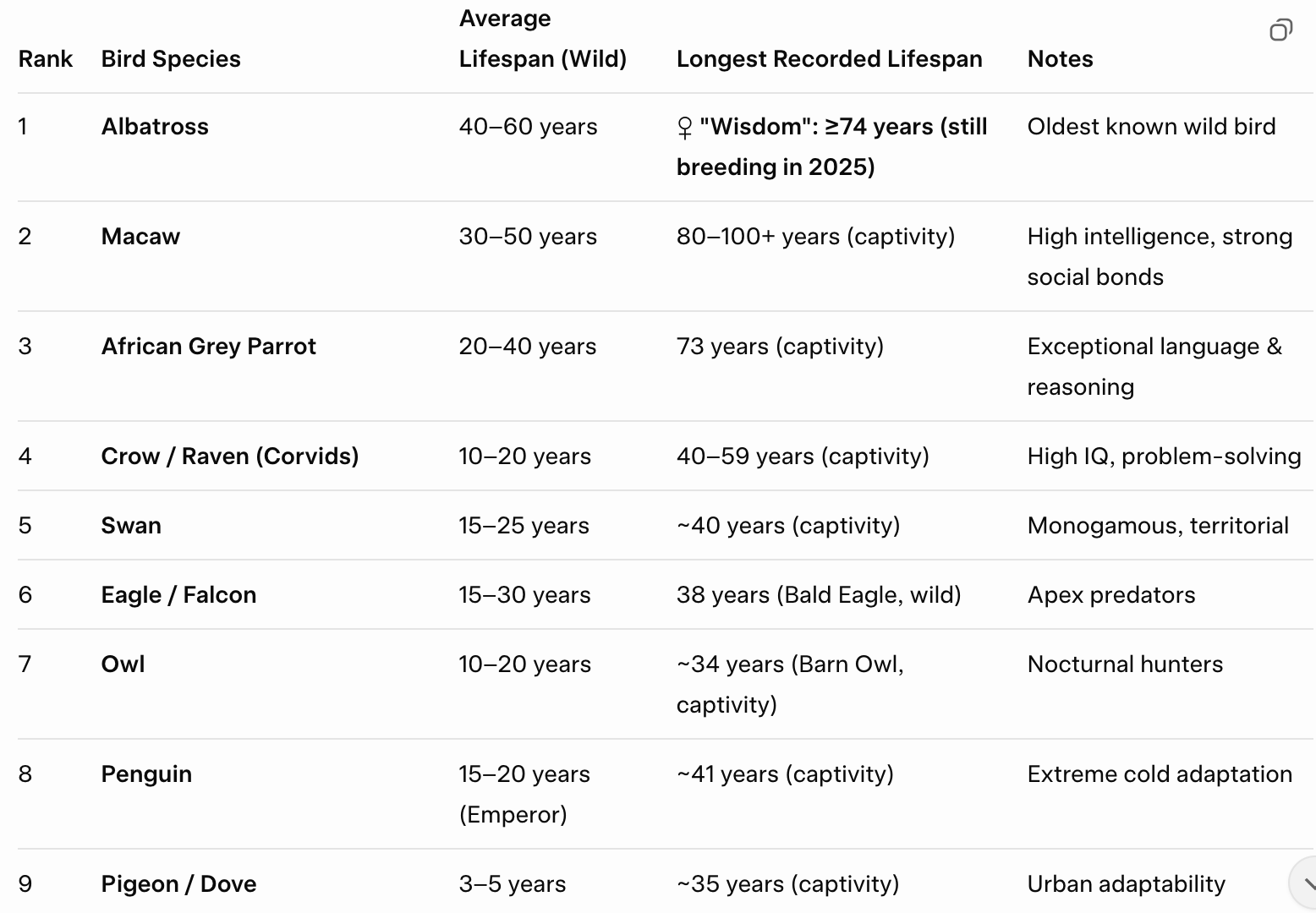
(Sources: Cornell Lab of Ornithology, Audubon Society, Journal of Avian Biology, USGS Bird Banding Laboratory, UK BTO ringing database)
🧬 3. Coevolutionary trend between lifespan and intelligence
Scientists have found:
- High‑IQ birds (such as parrots, crows, ravens) tend to live longer;
- because they require time to learn complex social structures and environmental coping strategies;
- the pattern resembles primates — “larger brain → longer learning period → longer lifespan”.
Social Brain Hypothesis:
- Proceedings of the Royal Society B (2024) analyzed 400+ bird species and found that species with a brain‑to‑body mass ratio > 0.015 (e.g., corvids, parrots) have an average lifespan 2.1 times that of similarly sized species.
For example:
The New Caledonian crow can manufacture multi‑part tools and solve multi‑step tasks. (Science (2024) reported it can make three‑part tools (hook + stick + wedge));
it also reaches lifespans over 20 years, which is rare for medium‑sized birds.
🌏 4. Summary table (category comparison)
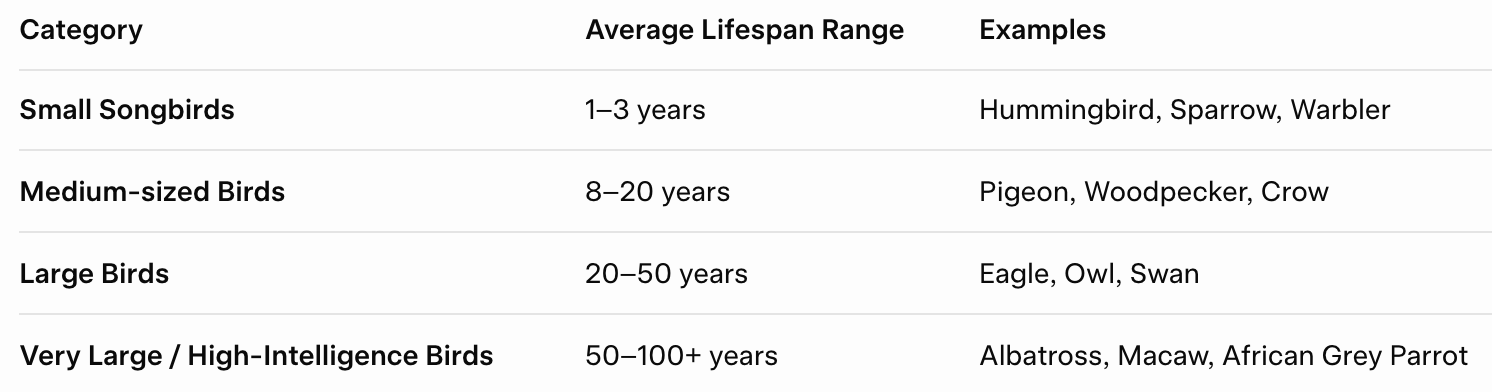
Table 2: Bird Lifespan by Size & Intelligence Category
🧩 Conclusion:
Bird lifespans range from 2 to 100 years,
The longest‑lived species are the albatross (in the wild) and the macaw (in captivity).
Cognition, body size and social structure are key factors that extend lifespan.
▶️ Enjoyed this article? Creating great content takes effort!
Subscribe to our YouTube channel:
AI Rosetta
Your likes, subscriptions and shares mean the world to us! 🙏
For more AI news, visit:
https://www.airosetta.com