
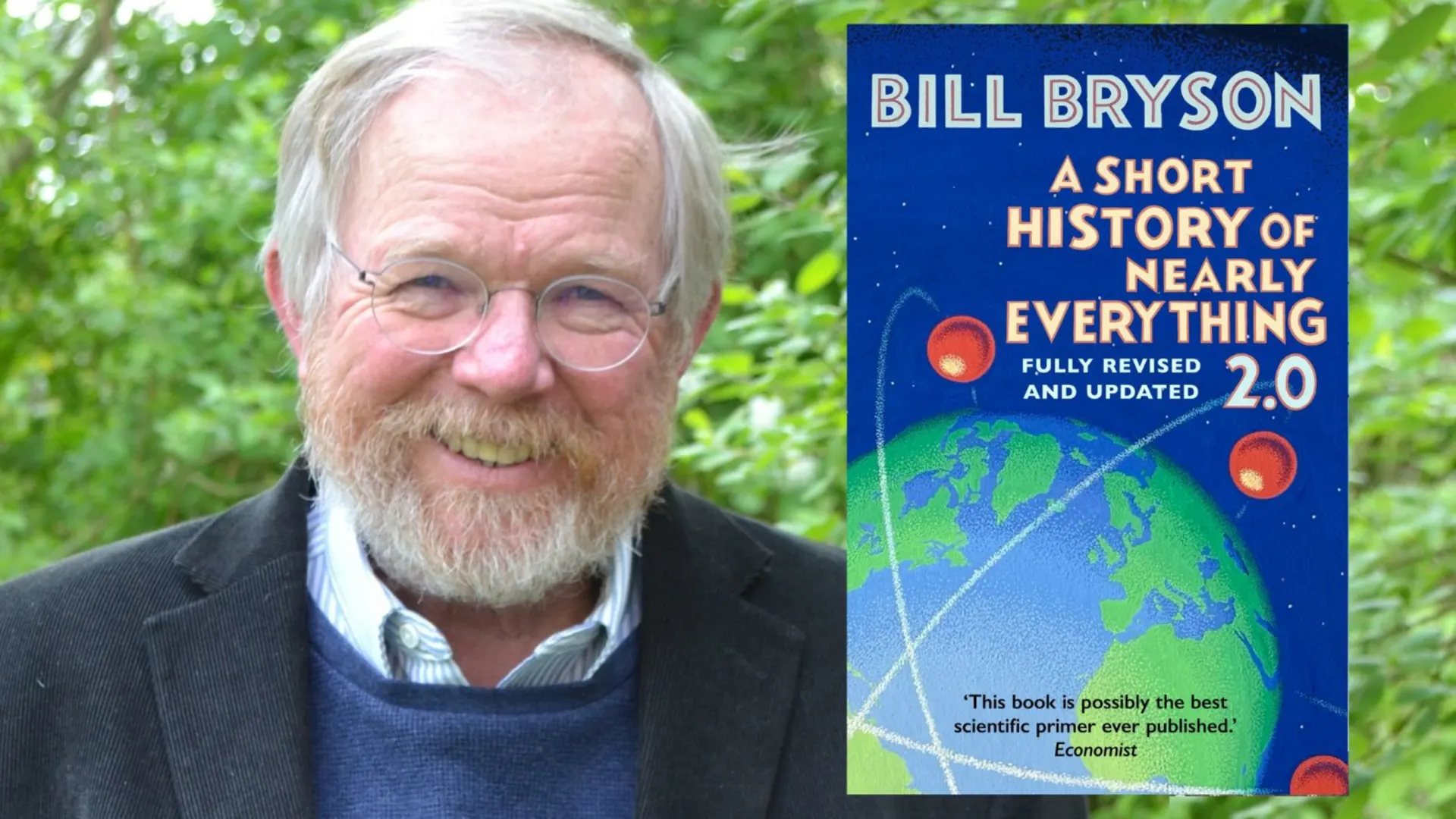
According to multiple reports, British popular‑science author Bill Bryson, famed for his humorous takes on the universe, is preparing to return to the forefront of 21st‑century science communication. The long‑awaited updated edition of A Short History of Nearly Everything — the 2.0 edition — will be published on 21 October 2025 by Doubleday. The original 2003 edition sold more than 20 million copies worldwide and won the Aventis Science Book Prize and the Descartes Prize; it remains one of the best‑selling non‑fiction science books of the 21st century. Now 73, Bryson personally carried out extensive revisions over 22 years after the first edition, incorporating the latest findings on quantum computing, the climate crisis, gene editing and the rise of AI, responding to readers who said the original, while a classic, was in need of an update and contained dated material. Penguin Random House has opened preorders with a first print run of 1 million copies; the book currently ranks first in Amazon's science preorder charts. In a feature interview with RNZ's Sunday Morning, Bryson joked, "I meant to retire, but science has moved so fast I couldn't resist picking up the pen again." This release is being treated as a major event in popular science and a fresh boost for science education.
The original A Short History of Nearly Everything used Bryson's characteristic wit and self‑deprecation to travel from the Big Bang to human civilization and tackle the question of how the universe came to be. Rather than a dry academic treatise, it read as a "science travelogue": Bryson visited laboratories, interviewed scientists and used entertaining anecdotes to link chemistry, physics and biology into an epic narrative. Over 22 years the book sold tens of millions of copies, was translated into more than 40 languages, and inspired many readers to move from scientific outsiders to curious explorers. But the world has moved on: the first edition did not cover the first image of a black hole in 2019, the genetic origins of COVID‑19, or CRISPR gene‑editing techniques, developments that made Bryson uneasy. "The book is still selling well, but the content is like a 20‑year‑old map — it needed updating," Bryson told RNZ. Reader feedback also pushed the decision: Goodreads comment threads called for "AI and quantum computing" updates by the thousands.
The 2.0 edition is a comprehensive upgrade: the text has been largely rewritten, with new chapters on the rise of AI, space exploration, global warming and the frontiers of quantum mechanics. Bryson retains the original's humorous core — including classic asides such as why scientists always seem to get lost in the lab — but injects new material: a new chapter explains why Pluto was reclassified as a dwarf planet (including an account that, as of 2025, recent observations have multiplied the known number of moons in the solar system), a section traces how the Higgs boson has "reshaped physics" since its 2012 discovery and a chapter explores how genomics has revealed "lost humans" such as Denisovans and the influence of Neanderthal DNA. The AI chapter is particularly notable: Bryson interviewed researchers from OpenAI and DeepMind and examines how large language models (named in the book as GPT‑5 and AlphaCode 3) simulate aspects of human thought. Shakespeare & Company previewed the book, saying, "Bryson reexamines the Big Bang to the rise of civilization with fresh perspective, answering the eternal question of how we came from nothing to something." Illustrations have been updated to include James Webb Space Telescope imagery, diagrams of quantum entanglement and animations of the CRISPR editing process; page count increases from 544 to 600. The hardcover is priced at $29.99/£29.99 and includes an audiobook read by Bryson himself, suitable for car playlists or AI voice devices.
The revision process took two years and saw Bryson revisit old friends, such as Ellis, the moss specialist at the Natural History Museum who featured in the original book, to witness a 50‑year research career. He also interviewed black hole photographer Katie Bouman and CRISPR pioneer Jennifer Doudna to ensure the book's coverage is current and authoritative. "Science is like a living organism — it keeps changing," Bryson said. The Guardian's forthcoming review describes the 2.0 edition as a reunion with an old friend: the humor intact and the knowledge doubled. The climate chapter incorporates data from the IPCC's 2023 reports and stresses "how humans are reshaping the planet," while also examining AI's role in climate modeling, such as simulating extreme weather. The quantum computing section discusses Google's Sycamore progress and includes predictions about quantum advantage by 2027.
Bryson's update extends beyond the pages: in February 2026 he will launch "The Best of Bill Bryson" global tour, which will weave material from the new book together with stories about scientific oddities and AI development. Lateral Events' website lists dates across the UK, Australia, New Zealand and the United States, with ticket prices of £/US$50–100; part of the proceeds will be donated to science education. A former chancellor of Durham University, Bryson plans to partner with OpenAI to develop AI educational tools based on the 2.0 edition and distribute them free to schools to promote global scientific literacy. He also said the tour will use AI to generate live Q&A to enhance interactivity.
Market reaction since preorders opened has been enthusiastic: Amazon preorders surpassed 100,000 copies and QBD Books called it "the rebirth of the century's best popular‑science book." Penguin Australia said, "Bryson makes complex science feel like friendly conversation; the new edition will inspire a new generation of scientists." The original was hailed by The New York Times as a "modern science classic," and the 2.0 edition is poised to continue that legacy. Goodreads ratings are projected to rise from 4.2 toward 4.5, reflecting strong reader anticipation. Technology companies are also paying attention: Microsoft plans to integrate 2.0 content into Bing AI, and Google Scholar has already listed the ebook for preorder.
Bryson's return not only revives a popular‑science classic but also brings it into the AI era. He half‑joked, "AI can write books, but I still want to tell stories from a human perspective." It is a reminder that science is a collective human adventure, not a machine solo. When the new edition appears on October 21, it will be watched to see how it sparks global interest in science; with the blending of AI and popular science, Bryson's 2.0 may set a new benchmark for science education.