
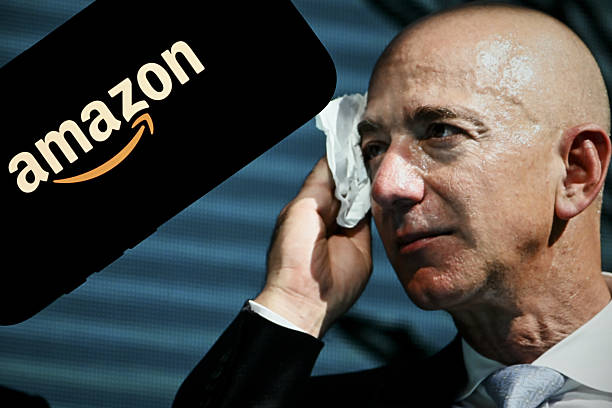
Amazon founder Jeff Bezos has started another venture — entering the competition for AI models that operate in the physical world with a newly formed startup called Project Prometheus. The company focuses on "physical AI," aiming to transform computer, automotive and manufacturing engineering through artificial intelligence, and its first financing round reached $6.2 billion. The New York Times reported exclusively on November 17 that Bezos will serve as co‑CEO, marking the tech magnate's return from "retirement" to the forefront of AI. The launch of Project Prometheus comes amid a surge in AI investment; leveraging his experience in cloud computing and e‑commerce, Bezos aims to capture the strategic high ground as generative AI moves into the real economy. Wall Street analysts say the move could reshape intelligent manufacturing, but it has also sparked a "copycat" controversy after Elon Musk mocked the effort as following xAI.
Bezos's comeback was not a sudden impulse. After stepping down as Amazon CEO in 2021, he shifted focus to Blue Origin and climate investments, but AI remained a quiet area of activity. Project Prometheus grew out of seed investments by Bezos's family office, Bezos Expeditions, into multiple AI firms in 2024 totaling more than $1 billion. TechCrunch reported the company quietly began operations in the first half of 2025 with a team made up of former Amazon executives and MIT engineering experts, and Bezos personally crafting strategy. On November 17, The New York Times, citing anonymous sources, said Project Prometheus had completed a $6.2 billion Series A led by Andreessen Horowitz and Sequoia Capital, with Bezos contributing $2 billion of his own capital. The financing is among the largest initial rounds for an AI startup, and the company is said to be valued at tens of billions of dollars. Bezos will co‑lead with an unnamed co‑founder, and the stated goal is to "translate AI from digital abstractions into physical entities," concentrating on engineering design, automated manufacturing and supply‑chain optimization.
Project Prometheus's core technical approach is what it calls "physical‑AI fusion." Unlike OpenAI's chatbots or Google's Gemini multimodal models, the company emphasizes AI's "embodied intelligence" in the physical world. Fortune has analyzed that its first product may be an AI‑driven "smart factory simulator" capable of predicting manufacturing defects from blueprints with accuracy reportedly above 95%. In an internal meeting Bezos said, "AI is not a sci‑fi toy, it's the factory's second brain. It will help engineers simulate physical interactions and cut trial‑and‑error costs." The company has partnered with NVIDIA to integrate H100 GPU clusters to support real‑time 3D rendering and physics‑engine simulation. Investopedia reported that Project Prometheus envisions an "end‑to‑end AI manufacturing platform," covering everything from prototype design to large‑scale production, with potential customers including automakers such as Ford and aerospace firms like Boeing.
The timing of the launch is sensitive. With questions about an AI bubble hanging over Wall Street, Bezos's move has been seen as timely. Forbes noted that AI investment in 2025 has exceeded $500 billion, yet only about 20% of that is for physical applications. Drawing on Amazon Web Services experience, Bezos plans to build Project Prometheus into an "AWS for AI manufacturing," offering SaaS products with annual subscriptions expected in the $50,000–$100,000 range per enterprise. eMarketer projects the physical‑AI market could reach a trillion dollars by 2030, and Bezos's initiative could take share from offerings like Tesla's Optimus robot and Siemens's industrial‑AI solutions. Ars Technica commented, "Bezos is not dabbling — he is reshaping the supply‑chain revolution."
Controversy has followed. On November 17 Elon Musk posted on X mocking the move: "Bezos copying again? xAI's physical‑AI is already ahead." Musk accused Project Prometheus of "replicating" xAI's Optimus robot path, which he says is already in factory testing. Bezos did not respond directly, but his team said on LinkedIn: "We focus on engineering AI, not robot hardware. Innovation comes from collaboration, not confrontation." The Guardian reported that the "copycat" accusation traces back to rumors of Bezos investing in xAI in 2024, and xAI is said to be valued at about $50 billion. Silicon Valley analyst Dan Ives of Wedbush commented, "Bezos has an AWS moat and Musk has Tesla's data advantage. Their clash will accelerate physical‑AI deployment."
Bezos's personal brand is another selling point for Project Prometheus. At 61, he is known for his "space ambitions" and climate commitments. By 2025 Blue Origin became, after SpaceX, the second company to complete a first‑stage rocket return and recovery, and it has secured NASA contracts totaling more than $1 billion. At the online launch event Bezos said in a video address, "What I learned at Amazon is that scale matters. AI will democratize manufacturing and let small companies operate like large ones." The fundraising round attracted investors including pension funds and Middle Eastern sovereign wealth, such as the Saudi Public Investment Fund.
Viewed more broadly, Project Prometheus reflects the 2025 trend of AI penetrating the "physical economy." A McKinsey report shows generative AI adoption in manufacturing at 45%, but physical simulation remains a bottleneck. Bezos's company plans to use "digital twins" to build virtual factory models and cut physical testing costs by about 50%. Unlike OpenAI's Sora video generation or Google's Gemini multimodal systems, Project Prometheus emphasizes "operability" — AI outputs that directly guide robot arms or 3D printers. eMarketer forecasts that by 2027 physical AI could contribute 2% of global GDP, and Bezos aims to capture a share of that market.
Challenges are significant. AI ethics is a primary concern: simulation datasets may raise intellectual‑property disputes, and the European Union's AI Act, due to take effect in 2027, will require audits of high‑risk systems. Bezos said, "We are building a responsibility framework from the ground up and are working with MIT's ethics center." Talent competition is fierce — the company has recruited more than ten former Amazon engineers, but Silicon Valley's wage inflation has pushed hiring costs up by roughly 20%. Musk's taunts also underscore the remaining "last mile" challenge: moving from simulation to real‑world deployment.
The launch of Project Prometheus could reshape the Bezos empire. From Amazon to Blue Origin and now AI‑driven manufacturing, Bezos appears to be weaving a "full‑stack future." Fortune wrote, "$6.2 billion is not an investment, it's a declaration." Returning as a CEO in the AI race, Bezos demonstrates that age need not be a barrier. Silicon Valley will be watching to see whether the space billionaire can use AI to reshape Earth’s factories.