
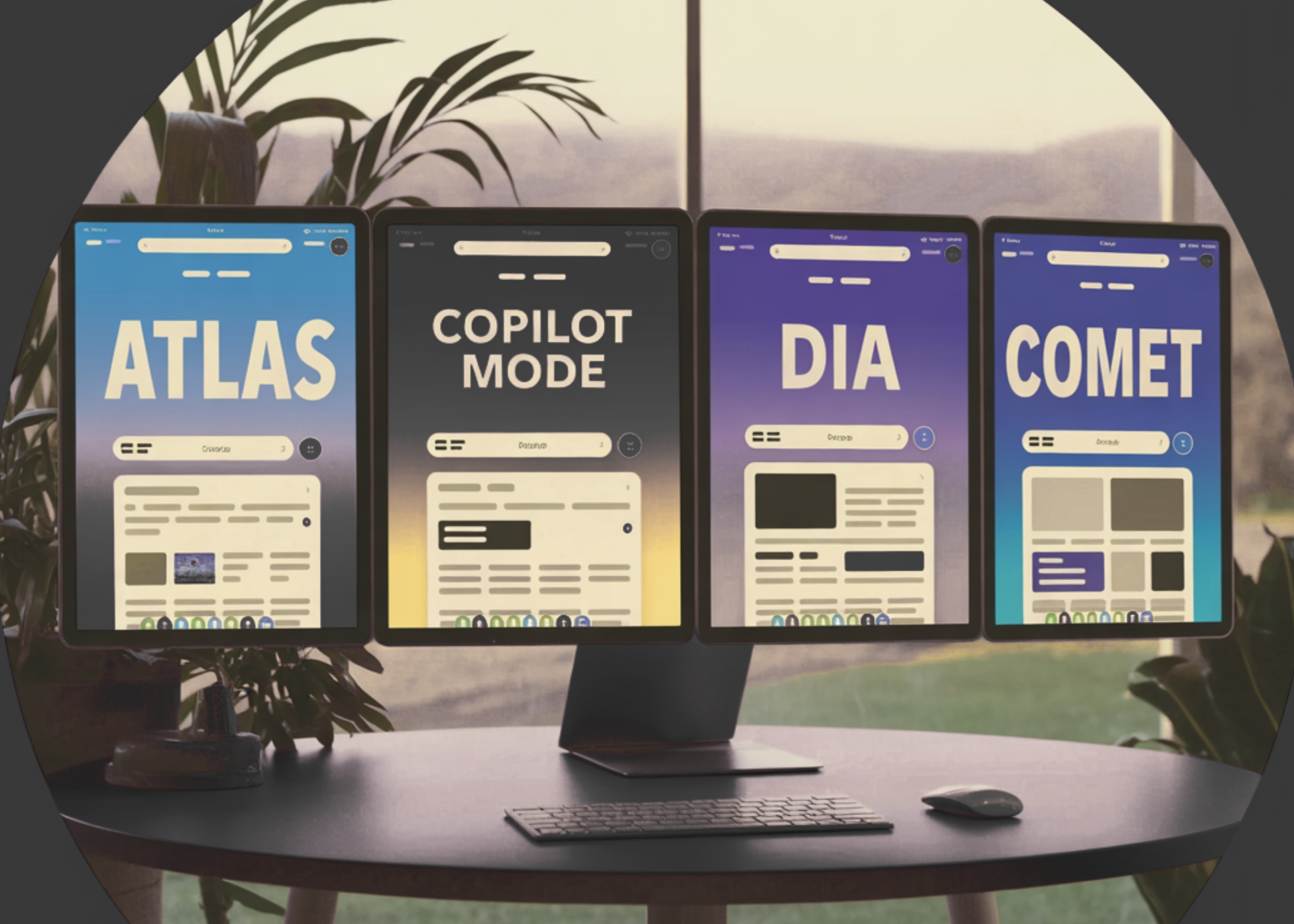
On November 15, 2025, MarkTechPost published a comparative report focusing on four so‑called 'agentic' AI browsers: Atlas, Copilot Mode (Edge's Copilot mode), Dia, and Comet. Rather than staying at the conceptual level, the report used real task chains and web actions as test units to demonstrate how each product differs when executing complex multi‑step processes.
Atlas is described as emphasizing 'task‑flow stability.' MarkTechPost notes that Atlas' long‑session memory can retain multi‑turn context and trace past actions. In scenarios requiring continuous navigation, form filling, and cross‑page information aggregation, its error‑recovery approach is more conservative: when a step fails, Atlas first attempts local retries before prompting the user for confirmation. In the UI, Atlas tends to present a 'to‑do action sequence' in a sidebar that users can drag to reorder, which is practical for younger users handling research or e‑commerce price comparisons.
Copilot Mode's greatest strength is its deep integration with the Microsoft ecosystem. MarkTechPost emphasizes that Edge's Copilot Mode can use system‑level plugins to control browser tabs, read local Office documents, and sync web content to OneNote or Teams chats. In terms of automation, Copilot Mode leans toward 'desktop‑grade collaborative automation': it seamlessly links search, summarization, meeting notes, and draft emails. However, it is more cautious about cross‑site automatic clicks and form submissions, and its default audit logs are more detailed to meet enterprise compliance requirements.
Dia is positioned in the report as a 'conversational workflow specialist.' It breaks multi‑step tasks into cardized subtasks and emphasizes passing parameters and state between cards. MarkTechPost points out that Dia's team‑collaboration features are finer‑grained: multiple users can annotate and stitch scripts within the same task flow and export executable API call sequences. For content creation, project management, or approval workflows requiring multiple sign‑offs, Dia's interaction design appears better aligned with enterprise needs.
Comet emphasizes developer‑oriented automation. The article notes that Comet offers the strongest support for action chains and scriptable extensions, providing fine‑grained error‑handling strategies, conditional branches, and external API triggers. Researchers and developers can embed complex scraping, experiment data collection, or automated testing into Comet workflows and roll back action sequences via version control. MarkTechPost also warns that Comet's high degree of freedom brings a steeper learning curve, and non‑technical users need time to adapt to its command‑style interface.
On security and controllability, the four products are all reported to implement audit logs, user confirmation steps, and rollback mechanisms, but details differ: Copilot Mode defaults to the strictest enterprise‑compliance posture; Atlas offers human‑in‑the‑loop automatic retries; Dia provides collaborative approval flows; and Comet emphasizes developer‑definable policies and key management.
Regarding pricing and availability, MarkTechPost notes that most vendors adopt a 'free trial + subscription' model and bill advanced actions or API calls separately. The report's final recommendations are practical: if your work depends on the Microsoft ecosystem and enterprise collaboration, prioritize Copilot Mode; teams needing conversational multi‑user workflows and approval flows should consider Dia; technical users seeking low‑level automation and script control are better suited to Comet; users who want stable everyday multi‑step automation with a consumer‑grade experience may prefer Atlas.
Overall, the 2025 comparison shifts the focus to 'whether these browsers can reliably complete multi‑step tasks on the web' rather than purely comparing model capabilities — a distinction particularly relevant to younger users who treat the browser as a productivity tool.