
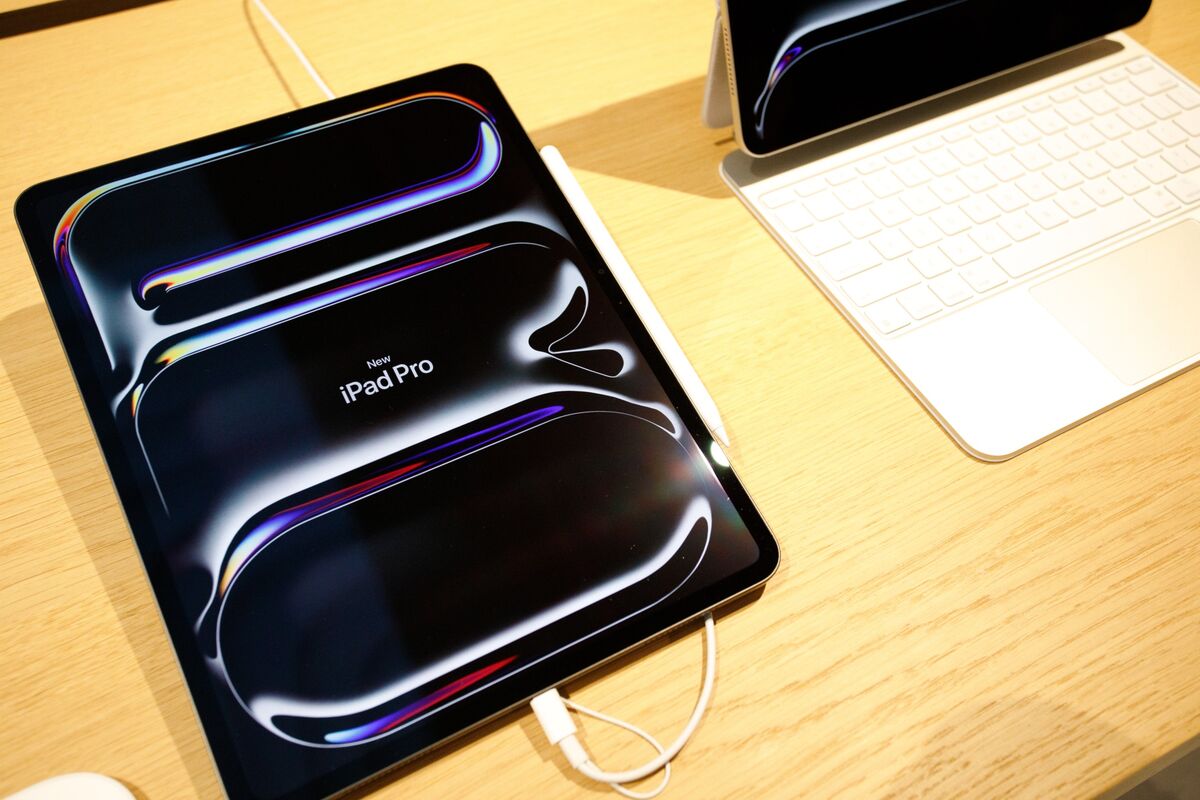
Background: Low‑key M5 Device Upgrades
According to a Bloomberg report published on October 19, 2025, Apple recently released M5‑powered iPad Pro, Vision Pro and an entry‑level 14‑inch MacBook Pro, quietly updated online on October 16. The report notes these devices' external designs are nearly identical to previous generations, with changes mainly limited to chip upgrades that improve compute speed, graphics and AI task performance, but offer limited appeal to typical consumers. For example, Vision Pro upgraded from M2 to M5 with roughly a 10% rendering performance gain and increased pixel count while overall form remained unchanged; MacBook Pro and iPad Pro likewise retain existing designs with processor‑only optimizations. This subdued hardware update did not spark broad consumer buzz, especially without major design changes or price shifts.
Drivers Behind the Stock Surge
Despite limited upgrades, Apple shares jumped 4% on Monday, October 20, 2025, closing at $262.24, a record high, and pushing market value to about $3.94 trillion—surpassing Microsoft as the world’s second‑largest listed company (per real‑time financial data). The main drivers of the rally are:
- Strong iPhone 17 demand Real‑time sales and trend data indicate iPhone 17 shipments in the first 10 days after launch in the U.S. and China were up 14% versus iPhone 16. Analyses from Counterpoint Research and Loop Capital show lead times for iPhone 17 extended by 13% and production plans rose from 84–86 million units to over 90 million. Reports from Morgan Stanley and Schwab Network corroborate the demand surge, and investor optimism around the iPhone 17 upgrade cycle became a core driver of the share price rise. Posts on X also reflected heated discussion, with some attributing Apple’s $1.4 trillion (55%) value recovery since the April 2025 trough largely to iPhone 17 strength.
- AI expectations and Siri upgrades The M5 chip's improved AI capabilities have raised market expectations for Apple’s AI ecosystem. Bloomberg noted M5 integrates a powerful neural accelerator that optimizes AI task handling, seen as a prelude to a major upgrade to Siri. Although details remain unpublished, investors speculate Siri could gain smarter multimodal capabilities with iOS 19 in 2026, aligning with Apple’s ongoing AI efforts. While Bloomberg also pointed to talent outflows in Apple’s AI unit, the market appears more focused on potential long‑term AI upside.
- Macro environment and market sentiment Broader market gains were supported by easing concerns over a U.S. government shutdown and the forthcoming wave of earnings and inflation data. As a leading tech name, Apple benefited from this optimism. Trending topics on X treated a break above $260 as a technical bullish signal, and stronger‑than‑expected iPhone 17 demand further boosted confidence.
- Analyst upgrades Loop Capital recently upgraded Apple to a "buy," while bullish forecasts from Gene Munster and Morgan Stanley reinforced investor confidence. Analysts contend the strong iPhone 17 start could fuel holiday‑season sales, supporting Apple’s fiscal Q4 2025 outlook. This news circulated widely on X and helped drive yesterday’s price surge.
Disconnection Between Upgrades and Stock Move
Interestingly, the M5 device updates were characterized as "subtle," with Bloomberg commenting these products "lack appeal for a typical shopper." MacBook Pro storage performance doubled (up to 4TB), Vision Pro refresh rate increased from 60Hz to 120Hz, and the iPad Pro saw modest improvements to its Tandem OLED display, yet these changes did not ignite consumer enthusiasm. The stock rally suggests the market is placing greater weight on Apple’s broader ecosystem strategy than on single‑product updates. The success of iPhone 17 and expectations around AI appear to have overshadowed the tepid reception of the M5 device refreshes.
Risks and Outlook
Despite the share‑price jump, rich market valuations (P/E data not provided) could expose Apple to downside risk, particularly if trade tensions intensify. Some posts on X warned that high valuation and tariff risks could pressure the stock. Additionally, whether M5’s AI improvements translate into tangible user value remains to be seen. Upcoming earnings reports and the sustained performance of iPhone 17 will be key near‑term indicators.
Conclusion
Apple’s M5 device upgrades are limited, but on October 20, 2025 the stock rose 4% to $262.24, largely driven by strong iPhone 17 demand, expectations for enhanced AI capabilities, positive macro sentiment and analyst upgrades. Referencing the finance card above, these factors helped push Apple’s market capitalization past $3.74 trillion. Although the hardware updates were modest, market confidence in Apple’s ecosystem was the primary catalyst. Going forward, Apple must deliver on AI promises and manage geopolitical risks to sustain this momentum.