
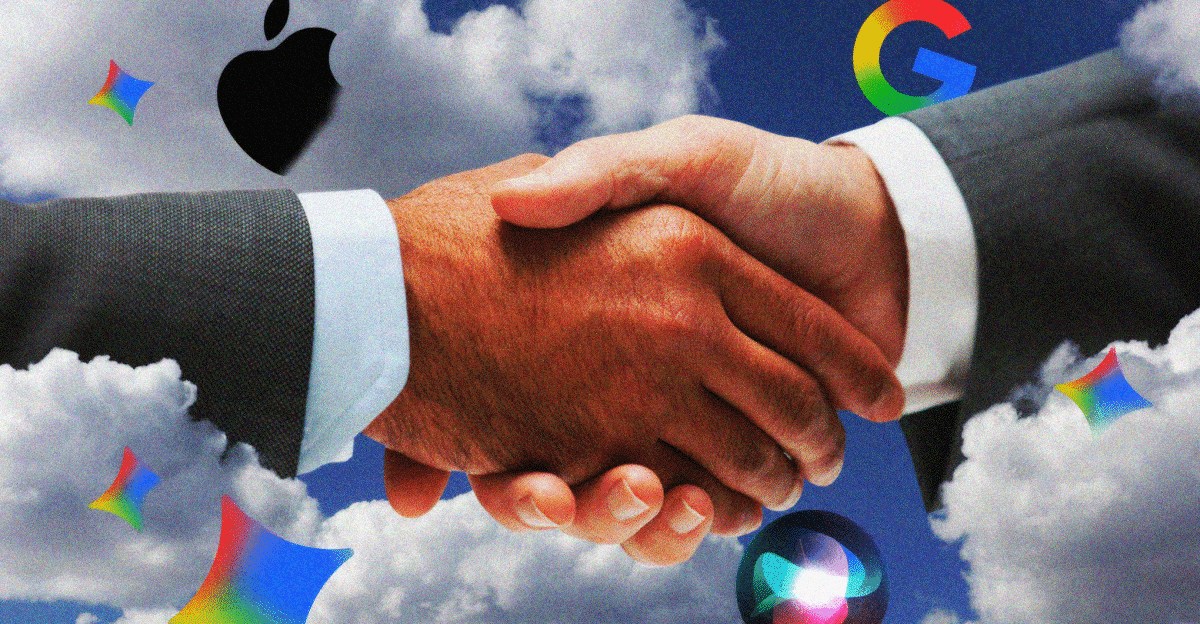
January 14, 2026 — According to The Verge, Apple and Google have reached a substantial agreement on the use of the large language model Gemini. Details indicate that Apple plans to integrate Gemini's generative capabilities as the core engine to enhance Siri and system‑level intelligent prompts, while Google will provide cloud‑based model services and ongoing updates.
The report notes the collaboration is not simply “shoving the model into phones.” Apple emphasizes that the interface, privacy, and response logic will remain under its control: when users make complex generative requests to Siri, Gemini can be invoked in the background for rich‑text, summarization, or creative tasks, after which Apple's policy layer will filter, format, and determine the final presentation. This means Apple retains control over the interaction experience and device‑triggered actions, rather than ceding all judgement to a third‑party model.
For Google, having Gemini available within Apple's ecosystem as an "endpoint distributor" is highly valuable. The Verge's analysis suggests Google can push its model to hundreds of millions of active device users through this deal, expanding training feedback and commercial reach without relying solely on operating‑system or browser‑level entry points.
The article also focuses on privacy and regulatory issues. Apple has long positioned itself publicly on privacy grounds, and the two companies reportedly made many stipulations regarding data flows, the use of anonymized signals, and on‑device processing. The Verge cites sources saying raw user data will not be directly provided to Google; any signals used for model fine‑tuning must undergo Apple's de‑identification and aggregation rules.
From an industry perspective, the agreement reveals a tactical shift by the two companies when facing emerging AI competitors. The Verge wrote: "they are building a line of defense" — combining core model capabilities with platform distribution rights to reduce the risk of startups or model‑focused firms capturing user attention. For young developers and startups, this could mean higher barriers to entry.
The report also mentions a commercial tug‑of‑war: Apple needs advanced generative experiences to keep its devices attractive, while Google seeks to demonstrate Gemini's value by expanding its real‑world usage. The two are complementary in technology and brand, but both are protecting their long‑term strategic space.
The Verge's analysis suggests this partnership, announced in January 2026, is both a shortcut to improving user experience in the short term and a defensive move by the two giants to gain advantage in the next round of AI competition. Users will soon see the results in a more "conversational" Siri, but the chain effects on privacy, regulation and market competition will be key areas to watch.
▶️ Enjoy this article? Creating content is hard work!
Follow our YouTube channel:
AI Rosetta
Your likes, subscriptions and shares are our greatest support! 🙏
More AI news at: https://www.airosetta.com