
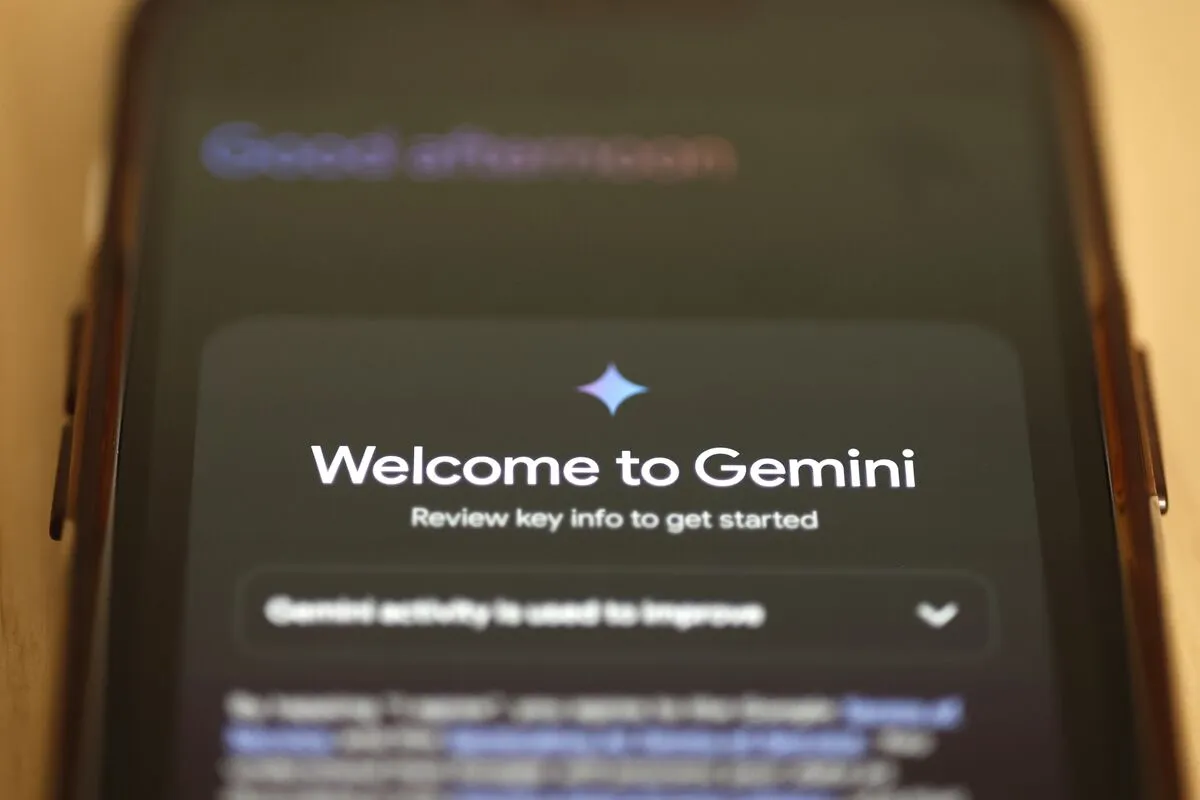
On Jan. 25, 2026, Bloomberg disclosed details of an internal reorganization that could shape Apple’s AI roadmap for years. The report says Apple is consolidating AI teams scattered across different business units, aiming to place voice assistant, browser and device‑level AI capabilities on a more unified engineering track to accelerate deployment and iteration. The report specifically notes Apple has partnered with Google to supplement models or search capabilities for its next‑generation Siri and generative features in Safari. This indicates Apple, while maintaining its privacy stance, is willing to leverage external large models and web retrieval for underlying capabilities to avoid the time and cost of training everything from scratch.
On product timing, Bloomberg cites internal plans saying Apple is advancing a "two‑track Siri" approach: one planned for iOS 26 positioned as a "local, fast, limited" assistant that will prioritize offline or privacy‑sensitive simple tasks and rely on on‑device models to ensure response latency and privacy boundaries. The other is planned for iOS 27 as a "cloud‑enhanced" Siri that taps stronger generative AI and web retrieval so Siri can handle long‑form text generation, complex reasoning and real‑time information integration based on the web.
Bloomberg described engineering considerations: engineers must support both ultra‑low‑latency local inference and cloud inference requiring large‑model compute within the same product line, forcing redesigns of architecture, APIs and privacy compliance. To that end, Apple is both stepping up on‑device model optimization and collaborating with partners on backend hybrid inference pipelines to balance user experience and data governance. Management has also seen notable changes. Design executive John Ternus has been listed as a "CEO candidate" and given more design responsibilities; Bloomberg sees this both as preparation for hardware‑software synergy for 2026 Macs and as putting product design at the core of controlling AI experiences. Several executives' functions have shifted, and AI project leaders have been reassigned into a new matrix management structure intended to break siloed development.
The report also mentions Apple is preparing for a 2026 Mac release — hardware must accommodate greater AI compute, thermal and power requirements; on the software side, macOS must integrate the two Siri types and browser AI features to ensure a consistent cross‑device experience.
Bloomberg's reporting signals two clear points: first, Apple no longer treats AI as a project it can rapidly complete through purely in‑house development and is willing to cooperate with external rivals or partners on certain key capabilities; second, on productization cadence, Apple is choosing a phased, dual‑track approach — first stabilizing a fast, on‑device "blade" and then bringing more complex cloud "tools" to users. This strategy considers privacy and performance while preserving tactical flexibility in future competition with giants such as Google and Microsoft.
For younger users, the near‑term change may be a nimbler, faster‑responding Siri in iOS 26; two years later, iOS 27 could offer a more "intelligent companion" interaction capable of combining real‑time web information for writing, creative generation and multi‑turn dialogue. When these features reach general users will depend on how Apple balances compute, privacy and business‑model trade‑offs.
▶️ Enjoy this article? Creating content is hard!
Follow our YouTube channel:
AI Rosetta
Your likes, subscriptions and shares are our greatest support! 🙏
For more AI news visit: https://www.airosetta.com