
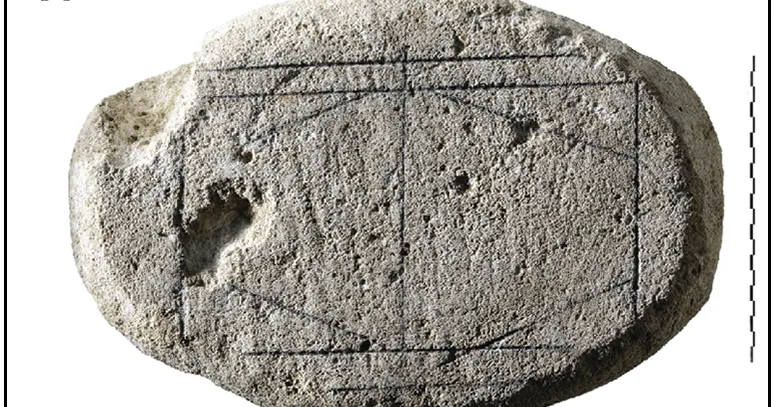
On Feb. 11, 2026, CBS News published a report that a multidisciplinary research team used artificial intelligence to reconstruct the rules of an ancient board game long labeled "mysterious." Rather than simply imposing modern game paradigms, researchers encoded the unearthed board structures, archaeological records and historical context into computational models and then used algorithms to systematically screen possible rule combinations.
The report describes that the team provided the AI with thousands of candidate rule sets, covering piece movement, capture and encirclement determinations, victory conditions, and the functions of special squares. Each rule set was used in a large number of simulated games, and the model gradually discarded illogical options based on consistency with archaeological evidence (such as board pit patterns, counts of recovered pieces, and piece morphology) and the fit of win–loss distributions.
Results indicate that the core objective of this "deceptively simple but thrilling strategy game" is to capture and trap an opponent's pieces in as few moves as possible. The researchers noted that rules consistent with the evidence emphasize mobility and encirclement tactics: pieces advance along specific paths while mechanisms exist to lure opponents into traps or to surround and immobilize them.
CBS's report also highlighted a key methodological detail: AI was not treated as a "black‑box translator" but as a filter over a broad rule space. The team manually defined plausible rule prototypes, then used techniques such as self‑play and Monte Carlo tree search to evaluate each rule's performance across large numbers of randomized matches, ultimately selecting the interpretation that best matched the existing archaeological evidence.
The work not only reconstructs how an ancient pastime may have been played, but also demonstrates a new pathway for combining AI with the humanities. The report quoted researchers saying this approach can be extended to other "incomplete" cultural artifacts: when physical evidence cannot directly tell us how an object was used, computational simulation can surface the most probable uses.
The article did not equate the game directly with any modern board game, instead situating it within its historical and cultural context: the distribution of boards and burial goods, the materials and craftsmanship of pieces, and other constraints were used to eliminate rule variants that were incompatible with the recovered forms.
At the end of the report, CBS News noted that uncertainties remain: the model's conclusions depend on the input rule prototypes and archaeological interpretations. Nevertheless, the Feb. 11, 2026 study offers a more concrete perspective on how ancient people thought about strategy and play, and provides a template for future uses of AI to unravel historical puzzles.