
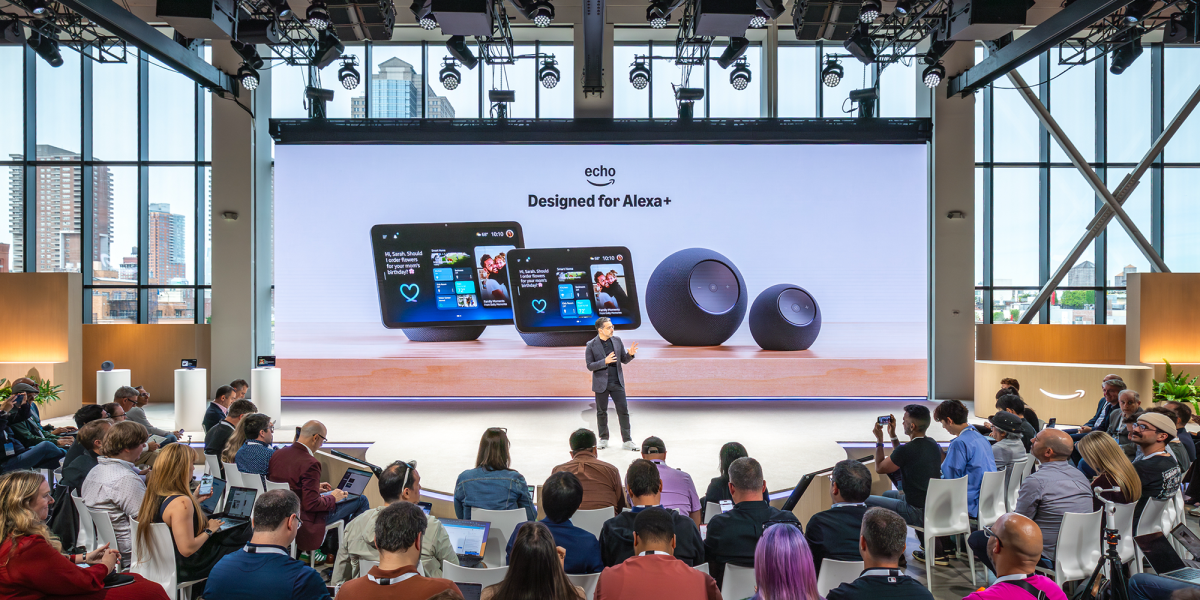
On September 30, 2025, Amazon announced the launch of its most advanced Echo devices to date, offering deeper AI experiences for Alexa+ subscribers. In its press release the company highlighted three key capabilities: high‑fidelity audio, a next‑generation AI processing unit, and a sensor‑fusion system called "Omnisense", aiming to upgrade Alexa from passive Q&A to a more proactive and personalized home assistant.
Amazon said the new Echo features notable audio improvements: optimized driver units and room‑adaptive algorithms designed to enhance low‑frequency response and vocal clarity, support multi‑room synchronized playback, and improve sound staging in small rooms. The company stressed these acoustic upgrades are not merely about chasing audio measurements, but about maintaining high voice‑recognition accuracy in noisy environments.
On the AI front, Amazon describes the "next‑generation AI processing" as an architecture that shifts more computation to the device: key intent recognition, short‑term context management, and wake‑word preprocessing can be handled locally to reduce latency and strengthen privacy controls. Combined with Alexa+'s cloud capabilities, the device can intelligently allocate tasks between local and cloud—short tasks processed locally, complex reasoning delegated to cloud models.
"Omnisense" is another centerpiece of the release—defined by Amazon as a sensor‑fusion strategy that integrates the microphone array, motion sensing, and proximity detection to infer activity and usage scenarios in a room. The company gave examples: when the device detects activity in the kitchen and a habit of playing morning news, Alexa+ can proactively offer traffic updates or schedule reminders; if late‑night activity is detected, the device will automatically lower notification volume and present information more succinctly.
Amazon also emphasized privacy and user control: users can intuitively manage on the device which sensors participate in Omnisense, select the scope of local processing, and control which data are synced to the cloud for personalization training. The company said these toggles will appear prominently during initial setup and in the settings menu.
Use cases for younger users were repeatedly mentioned: lower response latency means more natural voice interaction for online gaming, real‑time collaboration, and creators recording podcasts; proactive suggestion features let the device push playlists, short messages, or smart‑home automation recommendations at the right moments—shifting from "waiting for commands" to "seeing needs and suggesting actions."
Regarding availability and pricing, Amazon said the devices will be closely paired with the Alexa+ subscription, with some premium features rolling out first to subscribers; more models, colors, and accessory details will be announced in the coming weeks. Overall, the update positions Echo as a hub that blends local AI capabilities with cloud services, aiming to capture more frequent user attention at the smart‑home entry point and in voice‑AI experiences.