
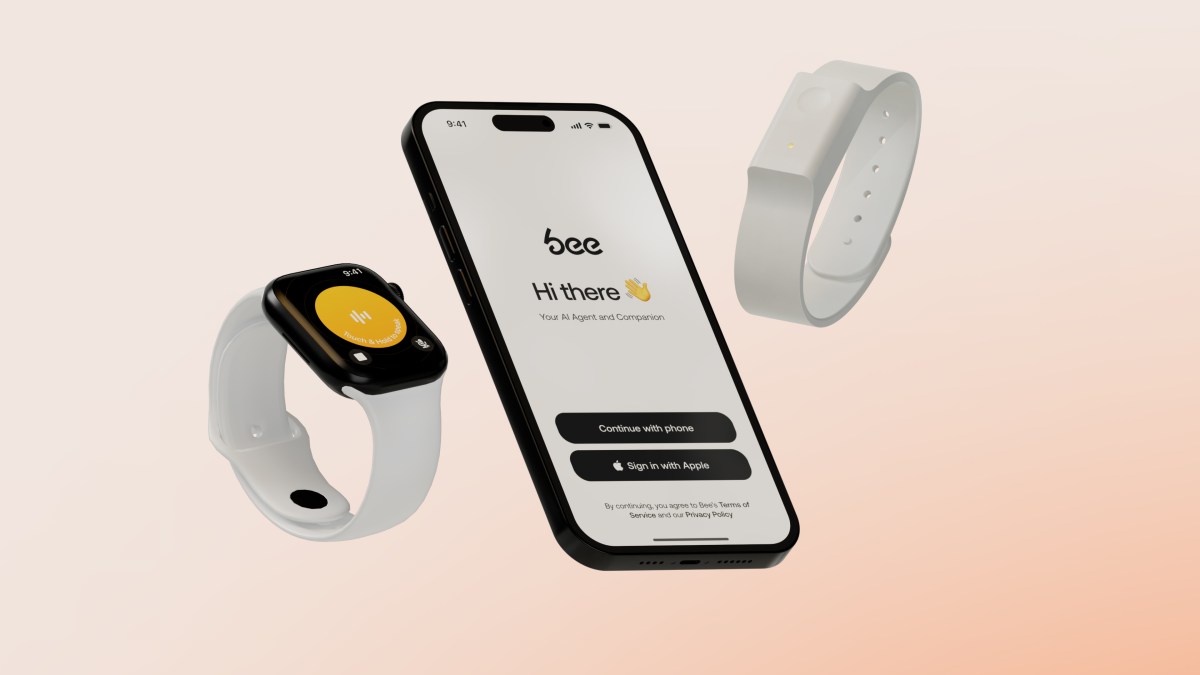
On the eve of the 2026 CES consumer electronics show, Amazon officially showcased its newly acquired AI wearable Bee, marking the tech giant's strategic deepening in consumer AI hardware. The acquisition, completed in July 2025, brought Bee — a $49.99 AI wristband or pin‑style device that can record and transcribe conversations in real time and serve as a personal AI companion providing insights and reminders. Although financial terms were not disclosed, the deal is seen as a key step in Amazon's return to the wearables market, aiming to extend AI from the home to mobile scenarios.
Bee's technology and background
Bee was founded by an eight‑person team in San Francisco and raised $7 million in 2024 to build an "environmental AI" device. The screenless, camera‑less device comes as a wristband or clip and can achieve up to a week of battery life. Its core capability is real‑time audio transcription for interviews, meetings, or classes. The device connects with Gmail, Google Calendar, phone contacts and Apple Health to construct a user knowledge graph and deliver personalized insights such as changes in relationships or mood trends. Bee uses hybrid AI models to transcribe audio but does not store raw audio, retaining only text to protect privacy.
Early use cases included students recording lectures, memory support for older adults, and summarization for professionals. After the 2025 acquisition, the Bee team joined Amazon's San Francisco office and rapidly iterated on features like voice notes (for quickly capturing ideas), templates and daily insights. Unlike devices such as the Humane AI Pin or Rabbit R1, Bee emphasizes passive operation without requiring manual input, aiming to avoid the battery and functional limitations those devices have faced.
Bee's founder Maria de Lourdes Zollo wrote on LinkedIn: "We imagine a world where AI is truly personalized, where your life is understood and enhanced by technology." That vision aligned closely with Amazon's AI strategy and helped drive the acquisition.
Acquisition motives: from home AI to mobile expansion
Amazon's Alexa already spans roughly 97% of hardware device types but has been primarily home‑centered. The acquisition of Bee is intended to fill a mobile AI gap by providing "outdoor understanding" that complements Alexa's "indoor understanding." Daniel Rausch, vice president of Alexa at Amazon, said: "The Bee team created an experience that's 'important and delightful' — when you carry these AI capabilities all day, we can do more for customers."
Strategically, Bee strengthens Amazon's environmental computing ecosystem. It can integrate with AWS cloud services to form a data flywheel that enhances personalization. Amazon's earlier wearable attempts, such as Echo Frames and other audio products, struggled against competitors like Apple AirPods and Meta devices. Bee's low price and privacy‑focused design offer a new entry point.
Furthermore, Bee's patents and technical talent are key assets. Its natural language processing and environmental computing patents bolster Amazon's competitiveness in the AI wearable market. At CES 2026, Amazon's demo of Bee highlighted its positioning in the wave of AI hardware.
Strategic impact: reshaping the AI wearable market
The acquisition reflects a convergence of AI, wearables and environmental computing. Amazon can integrate Bee with Alexa to deliver cross‑device, continuous AI experiences. As Zollo put it: "Bee and Alexa are complementary friends; of course there will be integration in the future."
The market impact could be significant: Amazon's return to wearables (after discontinuing Halo in 2023) challenges players like Meta and Apple. Bee's data collection capabilities could enhance Prime‑member services, for example by surfacing grocery discounts. In healthcare, Bee's connection to HealthKit and potential collaboration with Amazon One Medical present notable possibilities.
Discussion on X shows users excited about innovation but concerned about privacy. Posts such as one from "IrisGo" emphasize the importance of local learning to protect privacy.
Challenges and privacy considerations
Despite the broad potential, challenges remain. Bee processes audio in real time and does not store raw audio, but this approach limits scenarios that require audio playback or highly precise audio forensics. Privacy is central: the device's "always listening" nature raises concerns even though Bee promises not to retain raw audio. Comments on X, like one from @Orcazero1776, labeled it "technological authoritarianism."
Amazon must balance innovation with trust, particularly as data regulation tightens. Past product struggles such as issues with Humane's Pin remind that battery life and functionality need continued optimization.
Outlook: broad possibilities
In 2026, the Bee team plans to roll out more features, such as enhanced voice notes and deeper relationship insights. Zollo said: "Now the possibilities are limitless — that's why we're excited to join Amazon." Amazon's multibillion‑dollar investment in AI infrastructure supports Bee's scaling.
Overall, the acquisition reinforces Amazon's leadership ambitions in AI wearables and accelerates a shift from static to dynamic AI experiences. But privacy risks must be carefully managed to ensure technology benefits users rather than enabling surveillance. With its CES 2026 showcase, Bee could become a new benchmark in AI hardware.
▶️ Enjoyed this article? Creating great content takes effort!
Subscribe to our YouTube channel:
AI Rosetta
Your likes, subscriptions and shares mean the world to us! 🙏
For more AI news, visit:
https://www.airosetta.com