
Artificial intelligence (AI), one of today’s most disruptive technologies, has deeply penetrated the economy, geopolitics and social governance. From medical diagnosis to financial risk control and defense manufacturing, AI innovation has become a key measure of national comprehensive strength. But who controls the "source" of AI knowledge production? A recent scientometric study posted on arXiv (arXiv:2509.25298) analyzes global AI publication trajectories from 2000 to 2025 and reveals a quiet shift in AI research hegemony: the combined share of the United States and the European Union fell from more than 57% in 2000 to under 25% in 2025, while China experienced explosive growth from under 5% to nearly 36%, establishing an undisputed leading position. This shift not only marks a multipolarization of the global AI ecosystem but also signals profound changes in future technical standards and innovation directions. This article, based on that study, reviews the evolution logic of AI publication dynamics, methodological innovations and strategic implications to provide forward‑looking insights for policymakers and researchers.
AI Publications: A "Barometer" of Innovative Capacity
Global competition in AI research has long extended beyond laboratories and evolved into a strategic contest between nations. At the end of the 20th century, the United States laid the academic foundation in AI, supported by top institutions such as Stanford and MIT and substantial federal funding. The European Union followed with cross‑border collaboration (for example, the EU Horizon programs). However, in the 21st century, with the rise of deep learning, East Asia—particularly China—has shifted from follower to leader through national‑level AI strategies (such as the "New Generation Artificial Intelligence Development Plan"). The study emphasizes that academic publications, as an "upstream indicator" of AI innovation, better reflect the depth and breadth of fundamental knowledge production than venture capital or patents. Unlike commercial metrics, publications capture early signals of research directions: from natural language processing to computer vision, these papers often presage downstream technological breakthroughs.
The literature review traces the evolution of scientometrics. Since Mingers and Leydesdorff (2015) pioneered the use of scientometrics for national innovation assessment, bibliometric analysis in AI has become a standard tool. The bibliometric foundations established by Hood and Wilson (2001) help quantify interdisciplinary intersections (such as computer science, mathematics and cognitive science) in AI research. Early keyword‑search methods were prone to bias (e.g., Bruce et al., 2025), underestimating emerging contributions. The study adopts the latest OECD.ai taxonomy and focuses on core topics labeled "AI" or "machine learning" to ensure a conservative, high‑confidence dataset. It also critically examines historical inflection points: Western dominance before 2010 stemmed from institutional advantages and funding tilts (Bertelsmann Foundation, 2023; LeCun et al., 2015), while East Asian rise benefited from policy‑driven investment (e.g., Hamilton‑Hart and Yeung, 2021; Podda, 2025). This background underscores the need for relative‑share analysis: absolute publication growth can obscure the zero‑sum nature of competitive dynamics.
Methodology: A Rigorous Quantitative Framework
The study’s innovation lies in a refined and transparent methodology, using the OpenAlex dataset as its core. This open‑source bibliographic database, following Microsoft Academic Graph, covers over 245 million scholarly outputs including journal articles, conference proceedings and workshop reports. The data range is limited to 2000–2025 and focuses on country/region attribution of AI publications, with metadata such as author affiliations and citation networks. AI papers are identified strictly according to OECD.ai standards: only works labeled as "AI" or "machine learning" in OpenAlex are included, and adjacent fields (such as speech recognition) require double matching to avoid spillover.
A highlight of the publication counting is the "fractional counting" mechanism, a proportional attribution algorithm designed to correct coauthorship inflation. Specifically, for a multi‑author paper, country shares are allocated proportionally by authors’ institutional affiliations: if a paper has four US authors, one Chinese author and one French author, the US receives 4/6, China and France each receive 1/6. This method reflects distributed contributions and avoids the double‑counting bias of traditional full counting (OECD.ai, n.d.). The analysis focuses on relative shares: the annual percentages of global AI publications sum to 100% to facilitate longitudinal comparisons.
Data processing used a hybrid paradigm combining STATA 18.2 and Python scripts. After downloading the OpenAlex subset from the OECD.ai platform in CSV format, Python agent scripts generated descriptive panel data analyses, including time‑series line charts, bar charts and cross tables. Time points were set at 2000, 2005, 2010, 2015, 2020 and 2025, supplemented by year‑on‑year (YOY) change charts to capture key inflection points. The framework contains no complex equations, and its simplicity ensures reproducibility: the fractional counting formula is essentially Country share = (number of authors from the country / total number of authors) × 100%, applied to annual totals.
Empirical Findings: Mirror Images of China’s Rise and the West’s Decline
The results are presented through seven figures and corresponding tables, systematically mapping global shares of AI publications and revealing a dynamic from unipolarity to multipolarity.
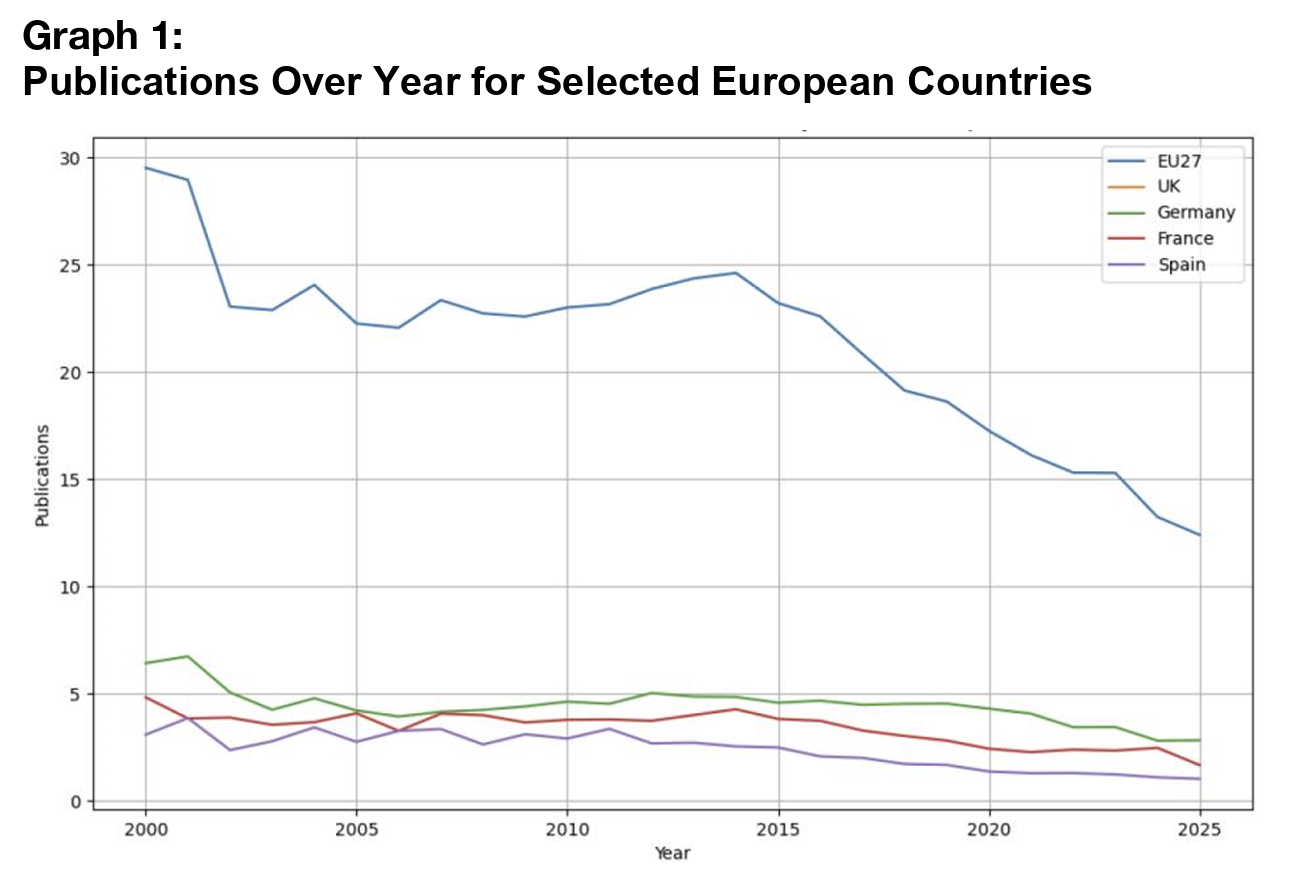
The European section (Figure 1, Table 1) shows the EU27’s share sliding from 29.53% in 2000 to 12.40% in 2025, after a "plateau" of 22–23% during 2005–2015 followed by a sharp decline. The UK, previously the single‑country leader, fell from 8.03% to 2.74%; Germany from 6.42% to 2.82%; France and Spain show similar downturns. Brexit further fragmented the European bloc.
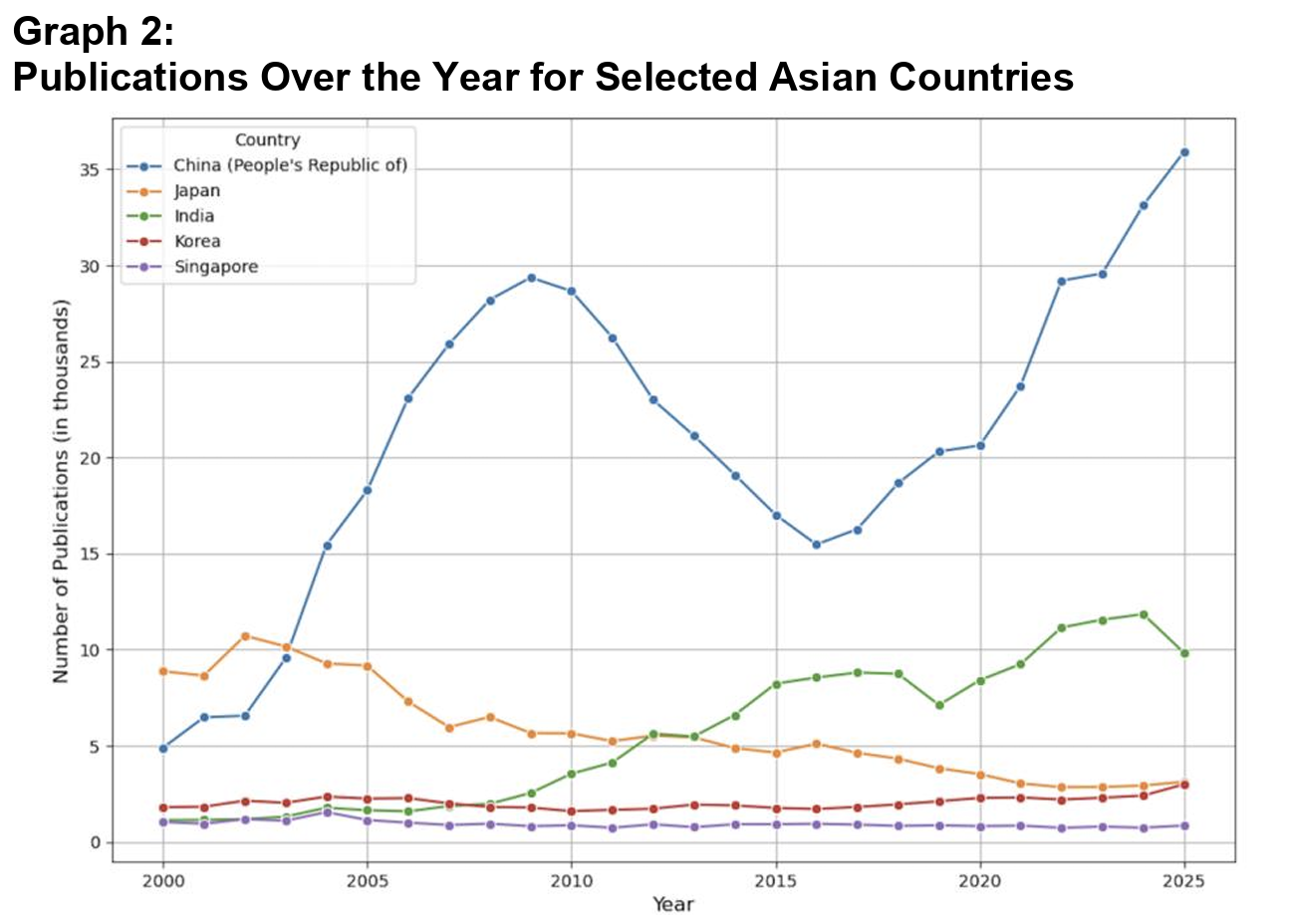
The Asia section (Figure 2, Table 2) paints a picture of ascent. China’s share follows an exponential curve: 4.90% in 2000, jumping to 18.29% in 2005 and 28.66% in 2010; after a brief dip to 17.02% in 2015 it returned to new highs post‑2020, reaching 35.91% in 2025. India also surged from 1.13% to 9.84%, forming a "China–India twin core." By contrast, Japan fell from 8.87% to 3.13%; South Korea rose slightly to 2.99%; Singapore remained stable around 0.8–1.0%.
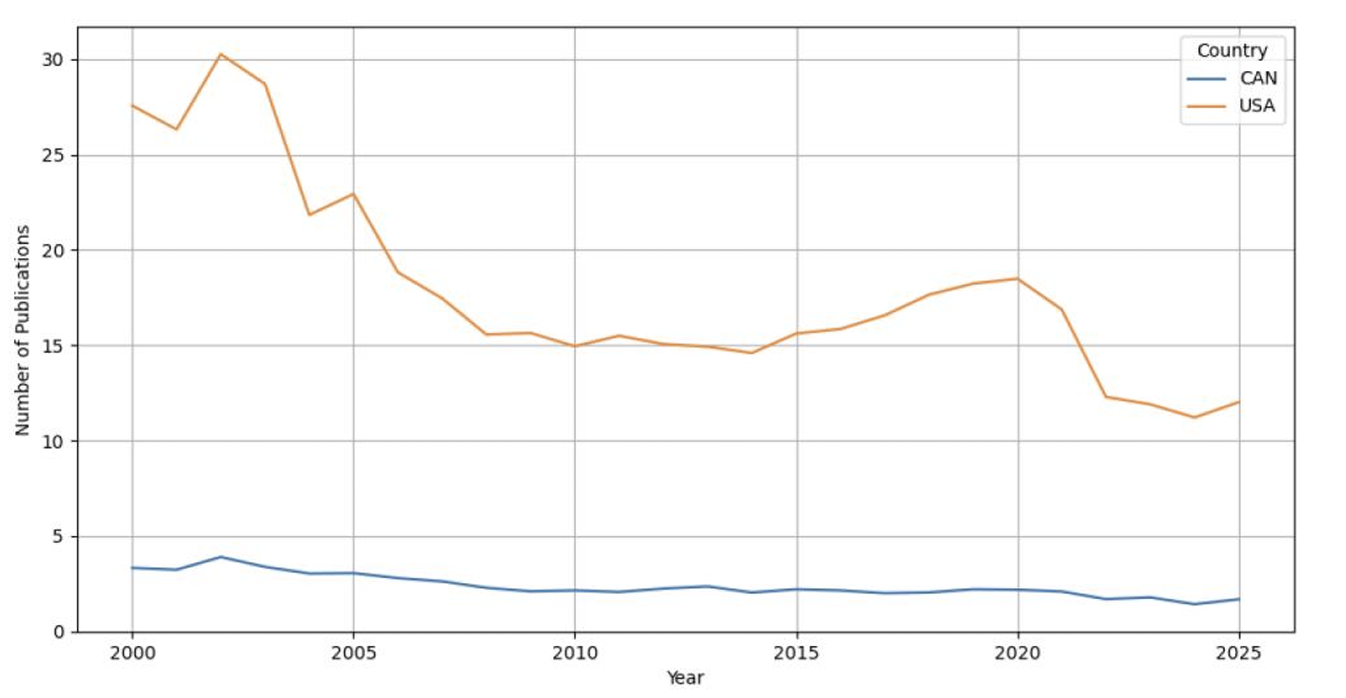
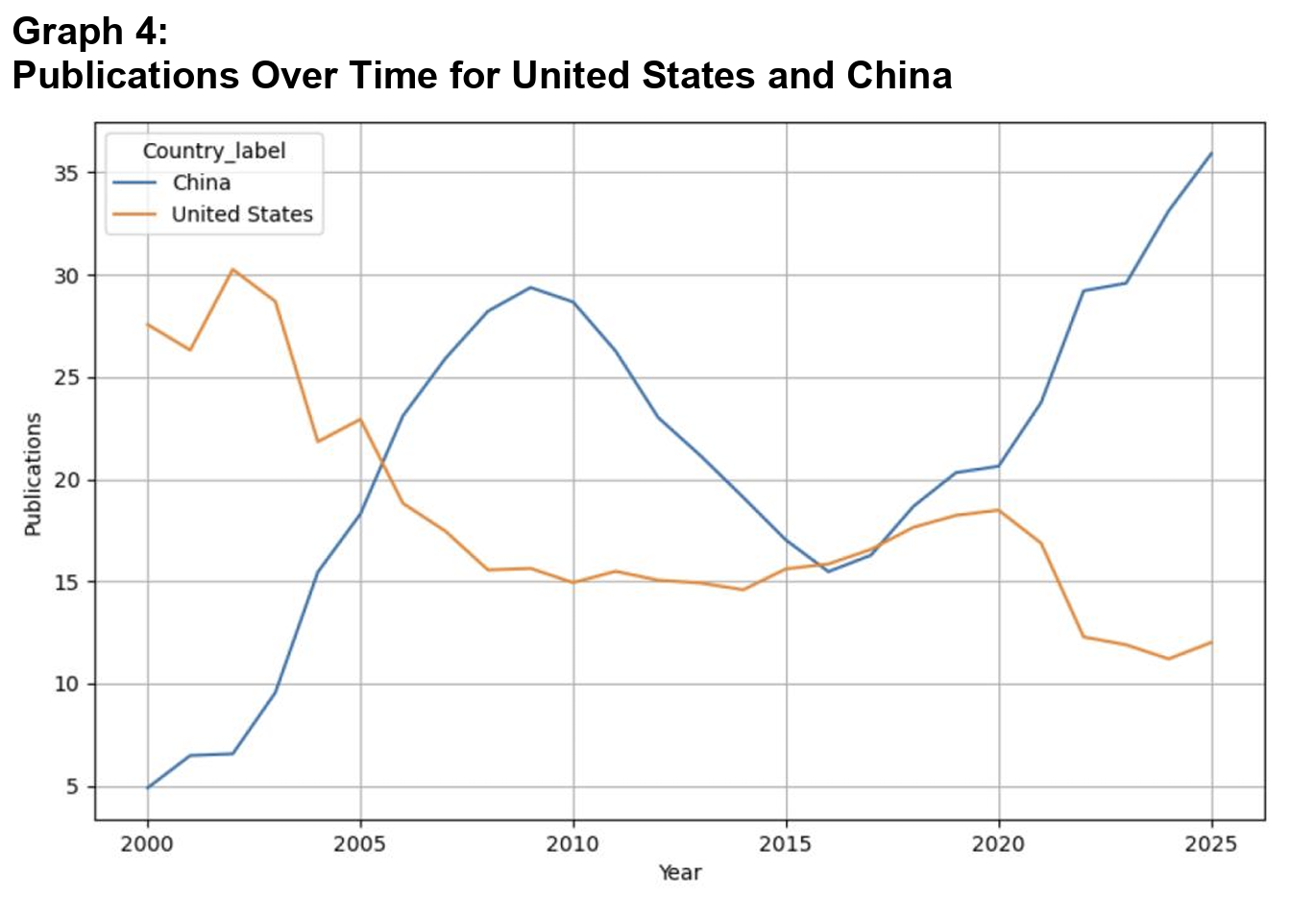
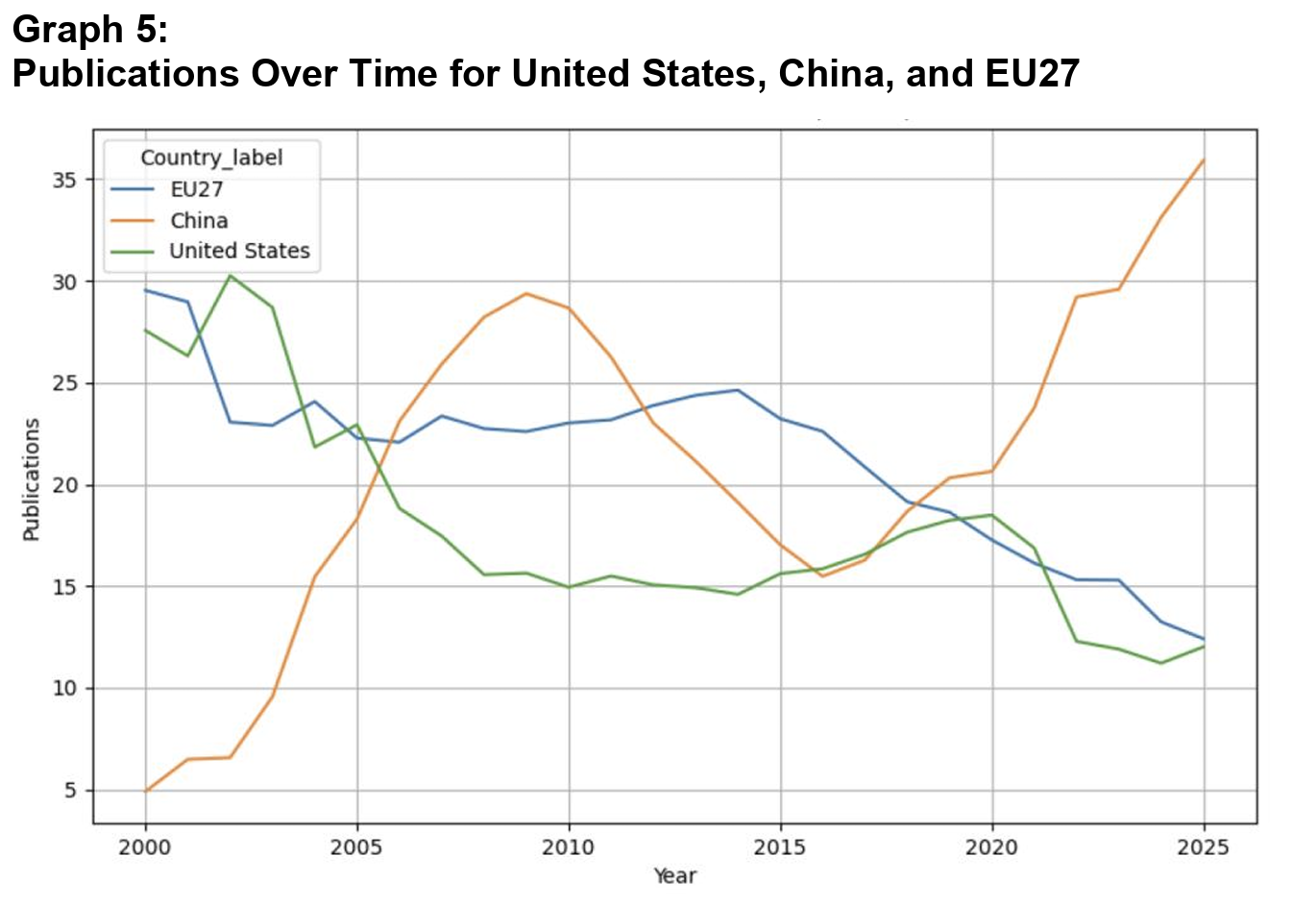
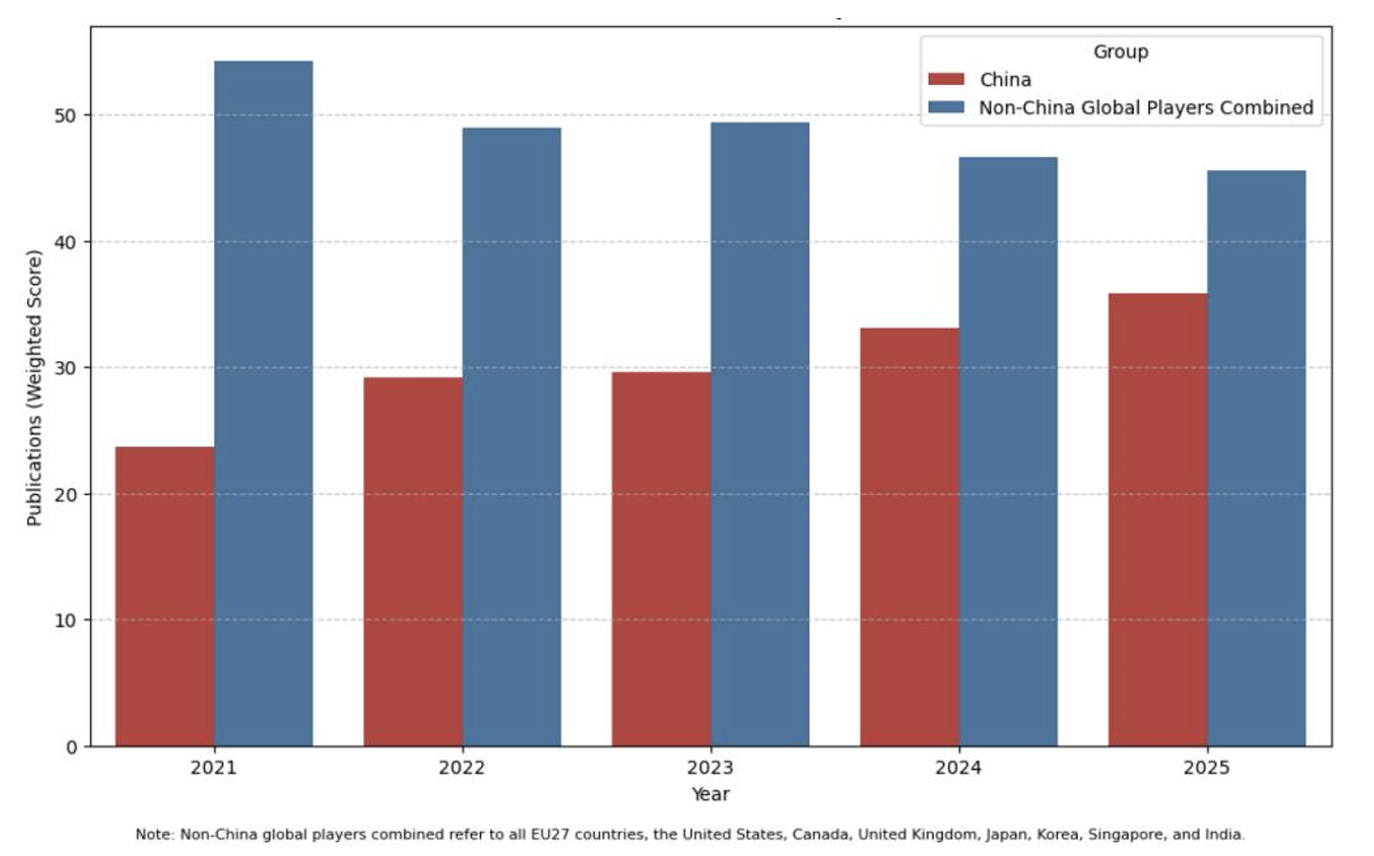
The North America section (Figure 3, Table 3) focuses on the collapse of US hegemony: the US share dropped from 27.56% to 12.01%, while Canada fell from 3.32% to 1.67%. The US–China comparison (Figure 4, Table 4) is striking: 27.56% vs. 4.90% in 2000, China overtook in 2005–2006, the two were neck‑and‑neck in 2016–2017, and China widened the gap after 2020. A three‑way contest (Figure 5, Table 5) shows the US+EU combined share falling from over 57% to 24.41%, with China emerging as the singular leader. China vs. non‑China major players (Figure 6, Table 6) further quantifies this: in 2021 China held 23.74% vs. non‑China 54.32%; by 2025 it was about 35.91% vs. 45.64%, with China approaching three‑quarters of the non‑China total. Year‑on‑year changes (Figure 7, Table 7) capture the pulse: China recorded +18.38% in 2005 and +8.43% in 2025, mirrored by declines of ‑7.48% and ‑6.29% for the US and Europe.
Graph 3: Publications Over Year for Selected North American Countries
Graph 6: Publications Over Time for China and Non‑China Global Players Combined
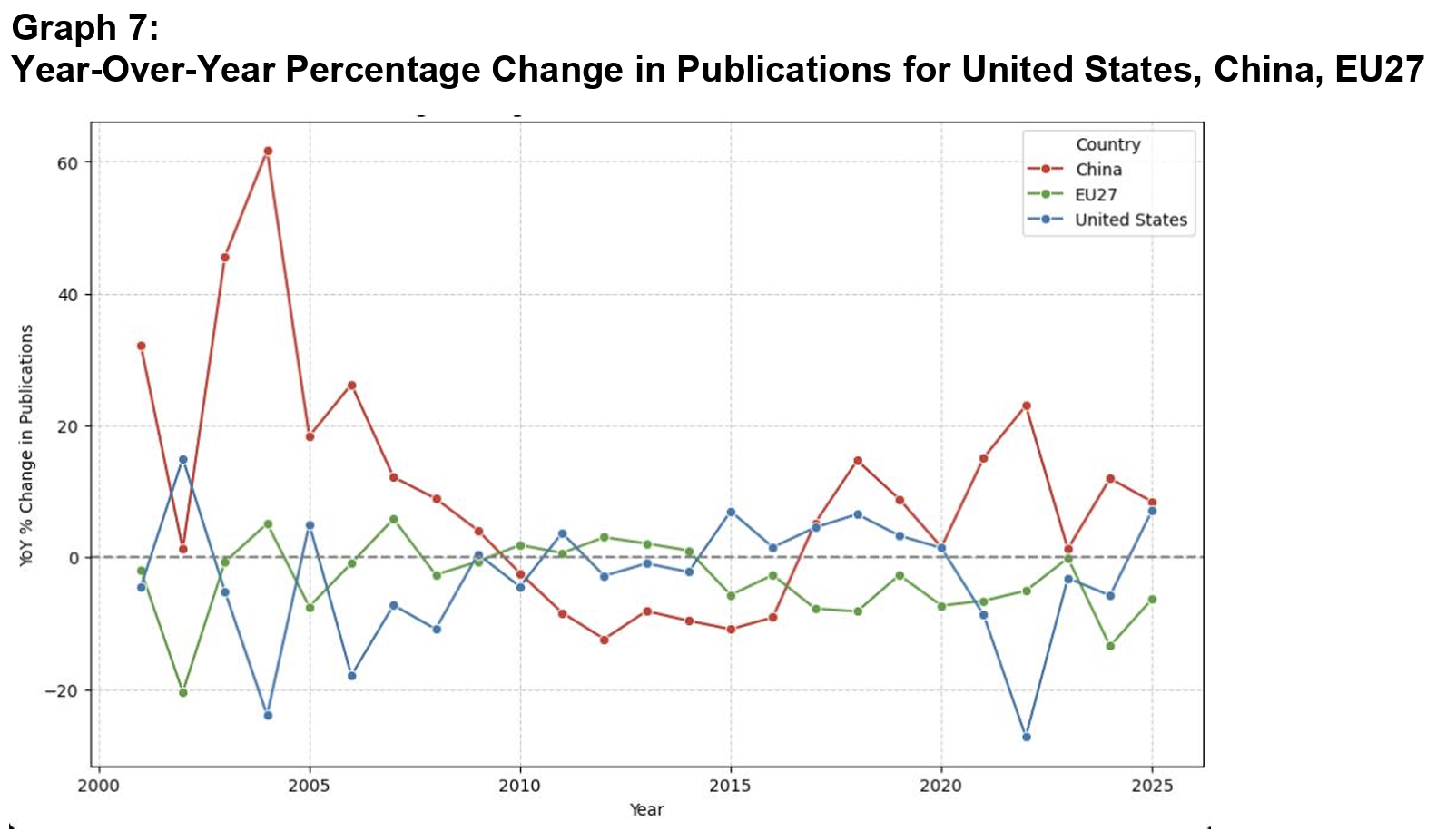
These data sketch an "Asian century" of AI publications: China‑driven growth represents a relative, not purely additive, shift in shares, revealing competitive tension within global expansion. ttps://arxiv.org/abs/2509.25298
Discussion: Deep Geostrategic Echoes
The interpretation goes beyond numbers to indicate a paradigm shift. The study argues that the halving of the West’s share is not absolute decline but relative stagnation: Western growth slowed while Asia’s policy dividend accelerated knowledge production. China’s 35.91% share already approaches the sum of major non‑China actors, amplifying its voice in AI standard‑setting (e.g., algorithmic norms and dataset sharing) (Quimba and Barral, 2024; Ellis, 2025). EU fragmentation (Brexit plus internal divergence) exacerbated the downturn, while India’s 9.84% rise points to an Asian multipolar ecology: the combined China–India presence now far exceeds the EU plus UK.
The geopolitical implications are profound: as a "double‑edged sword," AI publication leaders can shape global norms and influence chains from LLM training to ethical governance. The West must reflect on funding allocation and international collaboration shortfalls, while the Chinese model (investment plus output orientation) may become a template for emerging economies. However, this indicator focuses on volume and overlooks quality: high‑impact papers or patent conversion rates warrant further consideration.
Conclusion and Outlook: A Call to Action for Redefining the AI Frontier
In sum, the study, using a rigorous scientometric framework, falsifies the narrative of perpetual Western leadership and instead depicts an eastward AI map: China at roughly 36%, the US+EU holding about 24%, and India with near‑10% potential. This is not merely an academic shift but a strategic wake‑up call: publication volume as a basic capacity indicator presages the future distribution of the innovation chain. arxiv.org
The study’s limitations are clear: conservative classification may undercount peripheral AI contributions, and fractional counting, while fair, does not incorporate citation‑network "influence weights." Future directions include analyses of high‑impact subsets (for example, integrating H‑index measures) and coauthorship network modeling to capture latent collaboration. Looking beyond 2025, global AI research may enter a "collaboration era": the West could respond through open‑source alliances (such as Hugging Face), China may deepen AI exports along the Belt and Road, and India could fill gaps in developing regions. Ultimately, AI’s inclusiveness must transcend national borders—only through shared knowledge can a sustainable intelligent future be built.