
AI compute demand surges: Big tech "running out of earth power"
On January 4, 2026, TipRanks published an article, "AI Needs More Power, and Big Tech is Running Out of Earth," warning that energy demand from AI data centers is approaching the limits of Earth's existing resources, forcing tech giants to seek innovative solutions. According to the International Energy Agency (IEA), data centers accounted for about 2%–3% of global electricity consumption in 2024 and could double by 2026 to around 1,000 TWh (terawatt‑hours), comparable to Japan's annual electricity use. The report has prompted industry debate and highlights tensions between AI development and sustainability. This article draws on TipRanks, IEA, MIT Technology Review and The Guardian to analyze causes, impacts and possible responses to AI's energy needs.
Explosive growth in AI power demand
At the core of AI compute are large language models (LLMs) and generative AI like OpenAI's GPT series and Google's Gemini. Training and deploying these models requires immense compute: training a GPT‑4‑scale model consumes roughly 50 million kWh, equivalent to the annual electricity use of 1,000 U.S. households. TipRanks notes that as model sizes jump from hundreds of billions to trillions of parameters, power demand grows exponentially. The IEA reports data center electricity growth of 15%–20%, far above the global average of 2%.
Big tech firms are the main drivers: Microsoft, Google, Amazon, xAI and Meta account for over 70% of global data center power used for AI. Microsoft spent over $50 billion in capital expenditures in 2024 on AI infrastructure. A single Google data center can consume as much power as a mid‑sized city, and Google's AI‑related emissions reached 14 million tonnes in 2024. TipRanks cites experts saying each AI‑generated image uses roughly the electricity of a phone charge, and training a model can have emissions comparable to driving around the globe. These figures illustrate AI's "energy hunger": GPU clusters such as NVIDIA H100 require kilowatts of power, and cooling systems add another 20%–40% energy overhead.
Challenges: power shortages and environmental pressure
Big tech is "using up Earth's power." TipRanks reports that grid infrastructure is struggling to keep up with AI demand: data center clusters in Virginia, U.S., have strained local supplies and utilities face difficulties expanding capacity. The Guardian noted data centers in Ireland consume 18% of national electricity, prompting construction restrictions. MIT Technology Review analyzed that by 2026 AI power demand may outpace renewable energy growth, increasing reliance on fossil fuels and driving up emissions.
The environmental impacts are severe. AI data centers require substantial water for cooling: a medium‑sized facility can use as much water annually as 100,000 households. The IEA warns that uncontrolled growth in AI could raise global greenhouse gas emissions by 2.5%–5%. Economically, electricity costs are soaring: NVIDIA CEO Jensen Huang said in 2025 AI infrastructure investment could reach $4 trillion. Smaller AI firms may be unable to afford this, concentrating innovation at the largest companies.
Geopolitical factors exacerbate the issue: U.S.‑China tech tensions have constrained chip exports and affected data center builds. China's data center electricity use reached 200 billion kWh in 2024 and is projected to double by 2026.
Potential solutions: from space to optimization
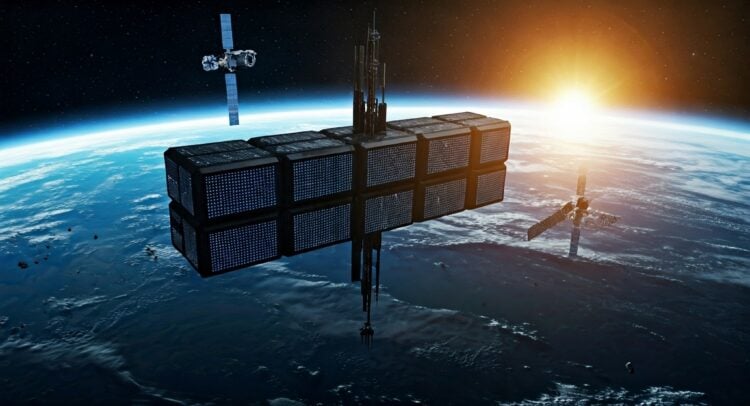
Facing the crisis, tech companies are exploring options. TipRanks mentions space‑based data centers as a frontier idea: sending servers to orbit to harness solar power and exploit microgravity cooling. Microsoft and SpaceX are testing satellite computing, with prototypes expected in 2026. Nuclear power is another option: Microsoft restarted the Three Mile Island nuclear plant to power AI. Renewable transitions are accelerating: Google has pledged carbon neutrality by 2030.
Efficiency improvements matter. NVIDIA's Blackwell chips continue to boost performance per watt through technical advances. The IEA recommends reducing data center PUE (power usage effectiveness) from 1.5 to 1.2 to save about 20% of energy. Policy intervention is also needed: the EU requires data centers to report energy use, and the U.S. is promoting greener grids.
Conclusion: balancing innovation and sustainability
The AI power challenge reminds us that technological progress must be sustainable or face limits. TipRanks warns that without solutions, AI development could stall. Optimists say the crisis could spur clean‑energy innovation. In 2026, finding harmony between AI and the environment will be an industry priority.
▶️ Like this article? Creating it takes hard work!
Subscribe to our YouTube channel:
AI Rosetta
Your likes, subscriptions and shares are our greatest support! 🙏
For more AI news visit: https://www.airosetta.com