
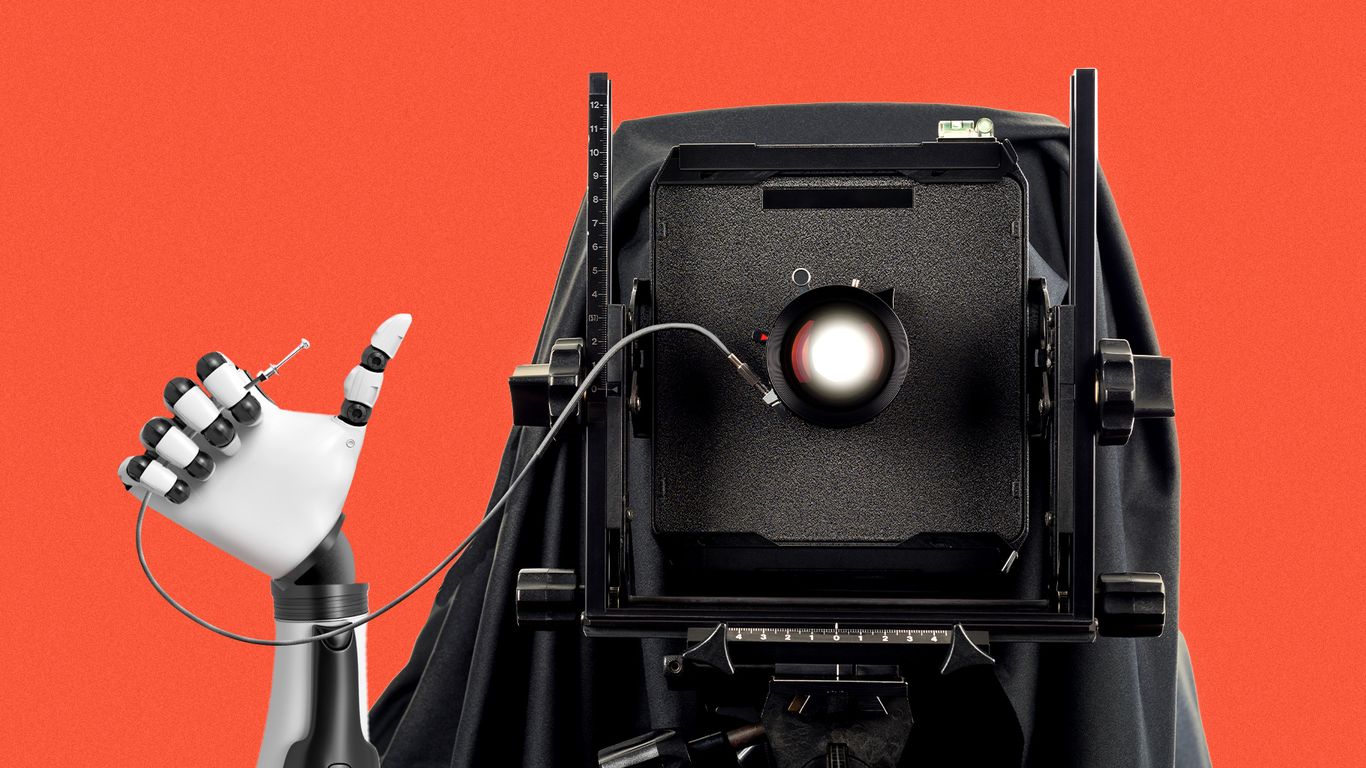
Axios report, September 13, 2025 — In a small Brooklyn studio that once relied on weekend headshot business to make ends meet, the softboxes and reflectors on the wall have been left increasingly unused this year. Photographers no longer only adjust light positions and skin tones; they find themselves telling clients, "The kind of professional headshot you want can now be produced by AI in minutes in a dozen styles, at a fraction of our price."
The piece describes how generative AI tools can produce large volumes of high‑resolution, "ready‑to‑use" images in seconds or minutes, from career‑focused headshots to stock imagery for advertising and social media. For clients, this offers dramatic speed and cost advantages; for photographers, it means a steep decline in orders and licensing revenue.
Axios notes a surge in AI images on stock platforms, further compressing the already thin margins of microstock ecosystems. Photographers who once earned modest royalties from single‑image sales now face a flood of AI‑generated substitutes, multiplying supply of similar images on platforms and eroding bargaining power and royalty income.
The article details specific practices: some emerging services combine real portrait samples with AI pipelines, allowing clients to upload a few photos and quickly generate multiple high‑quality headshots with varied lighting, backgrounds and expressions; other companies sell "synthetic model libraries" that let advertisers replace real shoots with controllable lookalike characters, saving on location and model costs.
At the same time, legal and ethical issues are intensifying. Axios reports that photographers and some organizations are questioning training‑data sourcing, work ownership and portrait rights. Disputes include the unauthorized use of photographic works as training data, whether synthetic images constitute infringement, and how to license generated likenesses. These controversies are prompting a new wave of legal and compliance actions.
To respond, some traditional studios and platforms are experimenting with strategies: some are moving services upstream toward "experiences" and brand customization, emphasizing the unique value of on‑set lighting, interpersonal communication and bespoke retouching; others are trying to label and trace AI images, developing detection tools or introducing watermarks and metadata standards to distinguish synthetic from real works.
Axios also reports operational changes within the industry: some photographers are adding "training‑data use" clauses to contracts, requiring platforms to disclose whether images have been AI‑processed when listed; stock operators are incorporating AI‑origin checks into review workflows and adjusting royalty rules to protect original creators. Technically, however, AI‑generated images are often stripped of EXIF and other metadata, making source identification a difficult challenge.
The report emphasizes market bifurcation. On one end are cost‑sensitive consumer and commercial clients who readily adopt AI‑generated headshots and assets; on the other are clients still willing to pay for in‑person collaboration, unique visual voice and emotional investment. In the short term, the volume and price pressure introduced by AI are unlikely to disappear, but demand for high‑end custom and brand imagery still has room.
Axios concludes that generative AI has moved from the lab to commercial use and is altering the image supply chain, and that the photography industry's next steps will depend on legal rulings, platform policies and how the market values "authenticity," "originality" and "verifiability." For photographers, adapting and finding new value points — from rights negotiations to creative strategy — is the most practical choice now.