
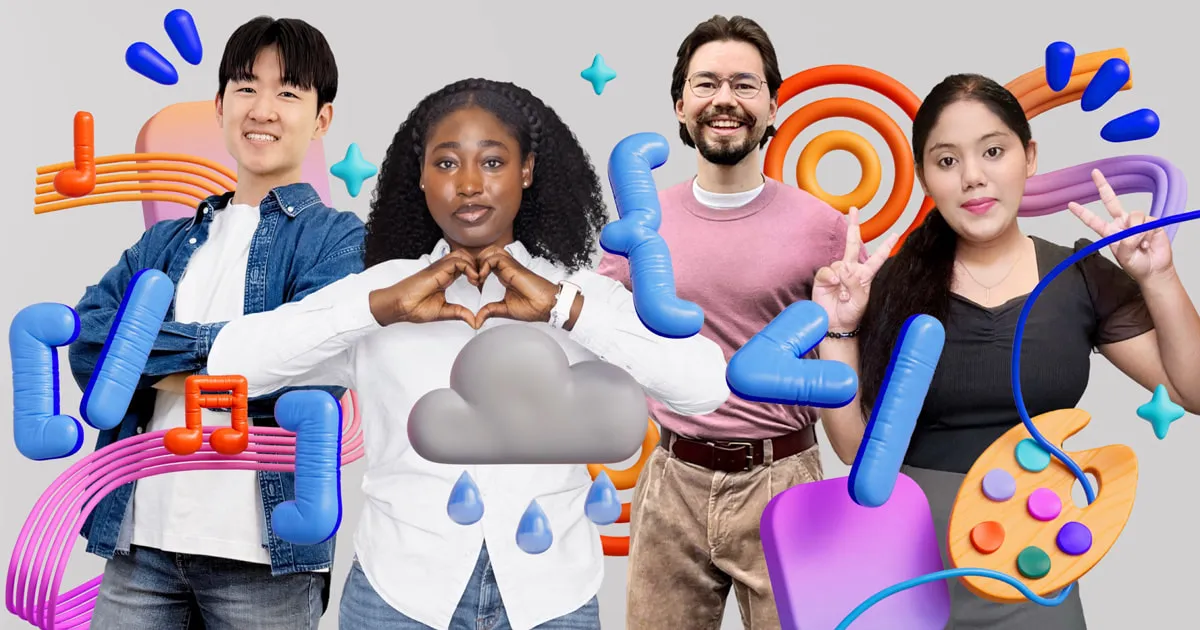
On May 7, 2026, Apple published a feature on its Newsroom titled "AI meets accessibility in this year’s Swift Student Challenge" and officially announced the winners of the 2026 Swift Student Challenge. This year’s 350 winners come from 37 countries and regions, and their projects demonstrate the deep integration of AI tools with Apple platforms, with particularly notable innovations in accessibility. Fifty Distinguished Winners were invited to attend WWDC 2026 at Apple Park in June for a three‑day exclusive program.
Susan Prescott, Apple’s vice president of Worldwide Developer Relations, said, "We’re always amazed by the breadth of creativity in the Swift Student Challenge. This year’s winners used the Apple platform, the Swift language and AI tools in extraordinary ways to build technically strong and meaningful App Playgrounds. We are incredibly proud to support their journeys and look forward to what they create next."
Four standout Distinguished Winners: AI addressing real‑life challenges
The biggest highlight this year is the deep coupling of AI and accessibility design. Several students developed practical, empathetic solutions inspired by personal experiences or community needs.
1. Steady Hands — Gayatri Goundadkar (India) 20‑year‑old Gayatri Goundadkar was moved when her grandmother could no longer continue Warli painting because of hand tremors. She developed Steady Hands, which leverages Apple Pencil stabilization technologies and the PencilKit framework, combined with the Accelerate framework to analyze stroke data, detect tremor components in real time and remove them so users with tremor disorders—especially older adults—can paint confidently. The app also creates a personal 3D virtual gallery for each artwork, helping users feel like "artists" rather than "patients." The interface is designed to be calm and friendly, with careful consideration of older users' habits.
2. Pitch Coach — Anton Baranov (Germany) 22‑year‑old Anton Baranov, inspired by his mother who is a literature professor, developed this "Shark Tank‑style" speech coach powered by Apple Intelligence. The app provides real‑time feedback to help users improve presentations, using AirPods motion tracking and the Foundation Models framework to detect filler words (like "um" and "like") and deliver personalized summaries and suggestions. The app is available on the App Store with over 6,000 organic downloads, and users report applying it to presentation practice, rap, and stand‑up rehearsal.
3. Asuo — Karen‑Happuch Peprah Henneh (Ghana) Henneh, from Ghana, witnessed the 2015 Accra floods and built Asuo to help communities during flooding. The app computes rainfall intensity in real time, uses historical flood data and an A* pathfinding algorithm to provide safe evacuation routes for residents in flood zones. Accessibility is central: the app supports full VoiceOver navigation and includes a customizable voice alert system to ensure people with disabilities are not left behind during crises. Henneh also advances girls’ tech education through the nonprofit Radiance Girl Africa.
4. LeViola — Yoonjae Joung (South Korea) 21‑year‑old Yoonjae Joung conceived LeViola during an exchange in New York after realizing they could not carry a physical viola. Using the iPhone camera, Create ML and Core ML, the app analyzes hand joints and arm angles to help users practice viola techniques without a physical instrument, greatly lowering barriers to music education.
Many of these projects used tools such as Anthropic’s Claude, OpenAI tools and Google Gemini during development, illustrating how AI can lower the barrier to programming and accelerate prototype iteration.
Impact assessment: education, innovation and social responsibility
1. A strong push for STEM education and young developer cultivation Swift Student Challenge has become one of the most influential student programming competitions worldwide. It significantly lowers the entry barrier to app development, especially through AI tools (for example, using Claude Agent to assist coding), enabling students outside computer science or beginners to realize ideas quickly. This helps cultivate developers from diverse backgrounds and expand the global technology talent pool. The 2026 winners show that programming education is shifting from pure "technical training" toward combining problem solving with human‑centered design.
2. Inclusive innovation in accessibility technologies The deep fusion of AI and Accessibility is this year’s standout trend. These student projects show how AI can genuinely serve vulnerable groups: from tremor‑assisted painting and easing presentation anxiety to flood evacuation and democratizing music education, all reflecting a people‑first design philosophy. This not only injects fresh ideas into accessibility features across the Apple ecosystem but also sets benchmarks for developers worldwide, potentially accelerating commercialization of practical accessibility tools.
3. Impact on the Apple ecosystem and developer community By highlighting cases of AI + Swift, Apple further consolidates its leadership in education and the developer ecosystem. The experience connecting 50 Distinguished Winners with Apple engineers at WWDC will help Apple attract and nurture the next generation of developers. It also demonstrates the value of Apple Intelligence in real‑world scenarios, reinforcing the "AI for Good" brand narrative.
4. Broader social impact These projects address real social issues such as aging, disaster response and educational equity, embodying the power of technology for good. In the context of global digital transformation, they encourage more young people to innovate from local community needs, helping narrow the digital divide—especially in developing countries and among marginalized groups.
Potential challenges: While AI accelerates development, sustained maintenance of student projects, technology ethics and data privacy remain concerns that need ongoing attention. Apple emphasizes innovation, social impact and inclusivity in the competition, setting a positive example for the industry.
Conclusion: In the AI era, creativity knows no bounds and inclusion advances together
The 2026 Swift Student Challenge, themed "AI meets accessibility," showcases how young developers use code and empathy to change the world. From preserving traditional Indian art to protecting lives in Ghanaian flood zones, these stories show that the highest value of technological innovation lies in serving people.
Through the Challenge, Apple is not only cultivating talent and advancing its platform ecosystem but also promoting the idea of "technology for everyone" globally. With WWDC 2026 approaching, the future growth of these outstanding young developers is worth watching; they may become the next generation of influential Apple developers or entrepreneurs.
In a time of rapid AI advancement, the Swift Student Challenge once again proves that true innovation starts by listening to real user needs and embracing inclusivity.
▶️ Enjoyed this story? Creating takes hard work!
Follow our YouTube channel:
AI Rosetta
Your likes, subscriptions and shares are our greatest support! 🙏
More AI news at: https://www.airosetta.com