
In November 2025, multiple authoritative evaluations emerged in the Text‑to‑Speech (TTS) API space. These reports, based on objective benchmarks such as MOS (Mean Opinion Score), WER (word error rate), latency and real‑time factor (RTF), compare the performance, language coverage and pricing models of open‑source/free versus paid services. Typical sources include Speechmatics' "Best TTS APIs 2025" (experts analyzed 12 services, focusing on quality, latency and cost), SiliconFlow's "Best Open‑Source TTS Models 2025" (benchmarking MOS and WER of open‑source models), and CompareVoiceAI's "TTS Pricing Comparison" (covering ElevenLabs, OpenAI, etc., emphasizing per‑character/per‑minute billing). These evaluations show that open‑source models lead in customizability and free deployment but lag paid services on quality and latency; paid APIs emphasize real‑time performance and multi‑language support. Below is a categorized summary based on these reports (data up to October 2025), with pricing details. Evaluation criteria include: speech quality (MOS 1–5, naturalness); latency (ms, time‑to‑first‑byte); WER (word error rate); language support; deployment (API/self‑hosted).
Open‑source/Free TTS API Comparison
Open‑source/free options suit developers who self‑host or run low‑volume tests, emphasizing privacy and customizability, but require GPU/CPU resources and have weaker real‑time performance. The SiliconFlow benchmarks show these models all exceeded MOS 4.5, but WER is higher for non‑English languages. In Speechmatics' evaluation, free tiers are often cloud trials, while unlimited open‑source deployments are available.
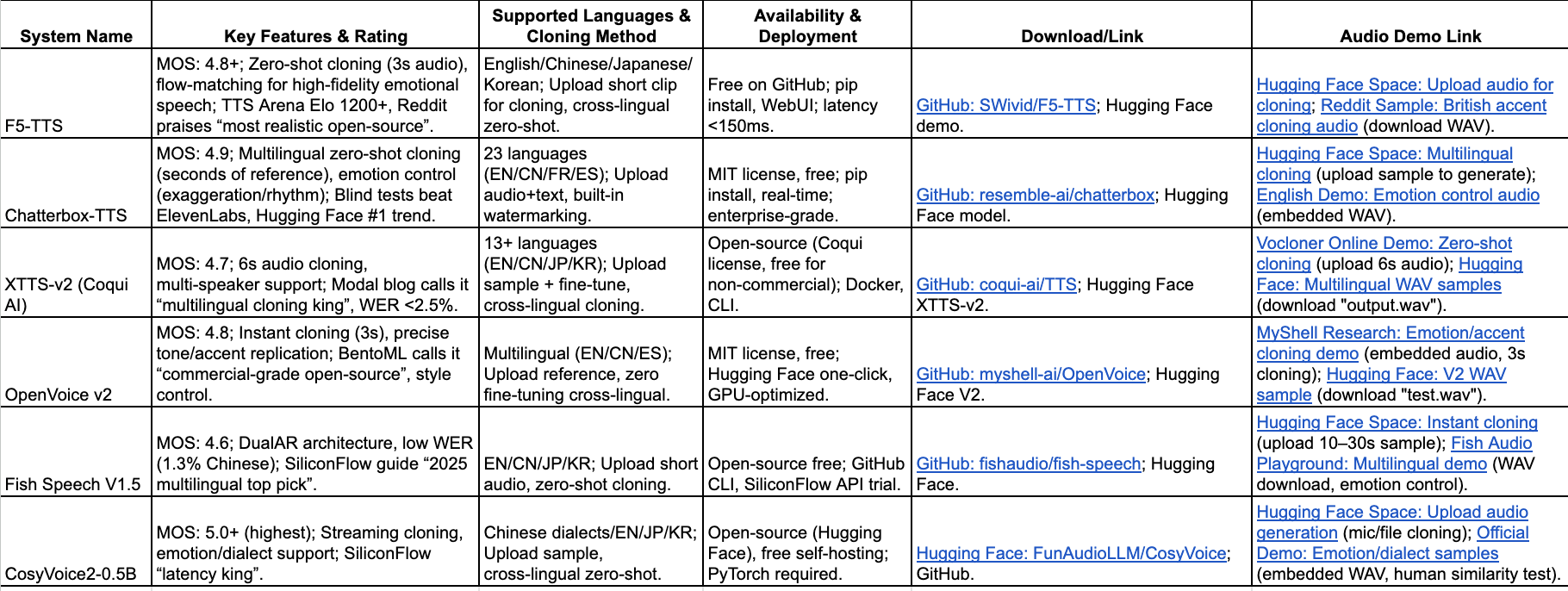
Evaluation insights: Open‑source solutions like Fish Speech show low multilingual WER (<2%), making them suitable for Asian markets; free tiers (such as Google's) achieve high MOS but are limited — above free quotas they charge ("$0.016/1,000 characters"). SiliconFlow benchmarks show CosyVoice leads in streaming latency (150ms vs. an average of 300ms), but requires self‑optimization.
Paid TTS API Comparison
Paid services focus on enterprise‑grade real‑time performance and emotional expressiveness. Speechmatics' evaluation shows latency <200ms and MOS >4.5, but costs are high (ElevenLabs is the most expensive). CompareVoiceAI highlights mixed per‑character/per‑minute billing, suitable for high‑volume applications.
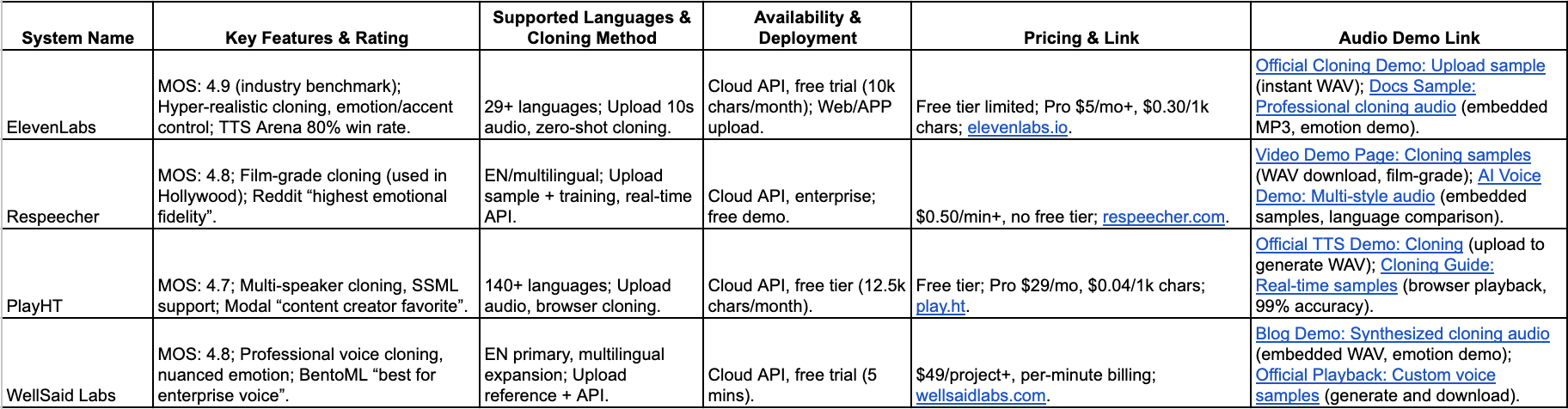
Evaluation insights: ElevenLabs leads in emotional MOS (4.9) but is costly (Speechmatics reports it is 27 times more expensive); OpenAI fits the GPT ecosystem with low latency but narrower language coverage. F22 Labs' report shows paid APIs average WER <2.5% and RTF <0.5 (real‑time <1).
Overall trends and recommendations
2025 evaluations consistently find open‑source/free options (such as CosyVoice) favorable on customizability and cost (free deployment, MOS >4.5), suitable for research and small teams; paid APIs (such as Cartesia) with latency <100ms and MOS >4.8 are ideal for enterprise real‑time applications, but per‑character billing can be expensive (high‑volume monthly costs $1000+). Language support: Azure is the broadest (140+). Recommendations: test Google's free tier on a low budget; choose ElevenLabs for high‑fidelity production. More details at Unreal Speech guide (audio sample comparisons).